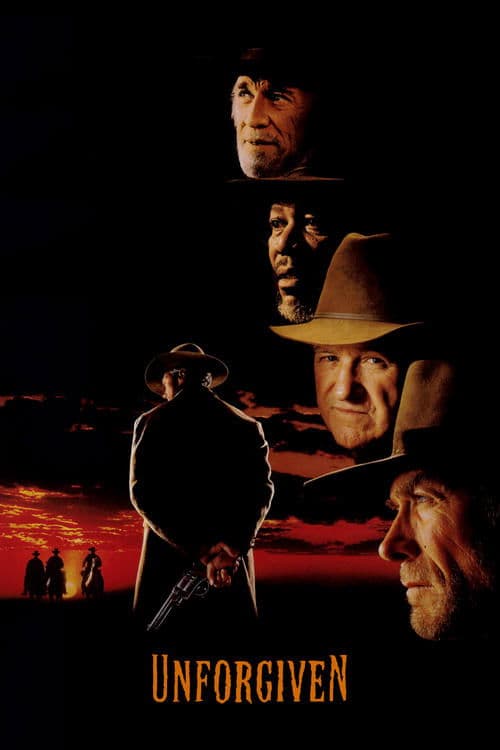
Unforgiven
Clint Eastwood · 1992
A retired outlaw and pig farmer reluctantly takes on one last bounty job after two cowboys mutilate a prostitute, only for the escalating violence to strip away the mythologies of the Old West entirely. Eastwood's film is the Western genre turned against itself.
Techniques Used
4 techniques identified in this film
Revisionist Genre Argument
NarrativeA film that deliberately inhabits a genre's conventions in order to systematically dismantle them, using the audience's expectations as the target of critique.
How this film uses it
Eastwood constructs every element of a classic Western — the retired gunslinger, the frontier town, the cold sheriff — then methodically removes their glamour, revealing violence as ugly, trauma as permanent, and heroism as myth.
Chiaroscuro Lighting
CinematographyA high-contrast lighting style that uses deep shadows alongside bright highlights to create moral ambiguity and visual tension.
How this film uses it
Jack N. Green's photography drains the West of romantic golden light, replacing it with flat grey skies, interior lamplight, and darkness that hides more than it reveals.
Triangulated Moral Ambiguity
NarrativeA three-way structural arrangement in which each character represents a different moral position, preventing any single perspective from claiming the high ground.
How this film uses it
Munny the reluctant killer, Little Bill the lawman who is worse than the criminals he controls, and Beauchamp the writer who turns violence into legend — each exposes the others' hypocrisies without providing an alternative.
Observational Restraint
NarrativeA filmmaking approach that withholds explanation, allowing behavior and environment to communicate character meaning without dialogue.
How this film uses it
Eastwood refuses to score the killings heroically or justify them morally — the camera observes the consequences of violence with the same flat attention it gives to pigs and mud.
You Might Also Like
Films that share at least one technique with Unforgiven
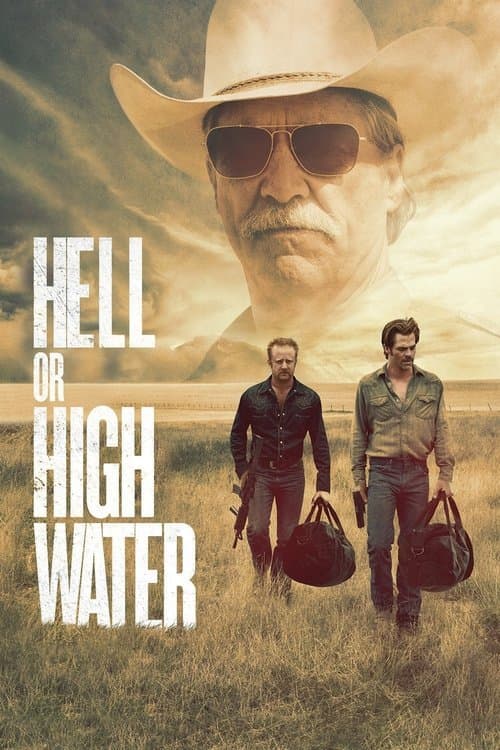
Two Texas brothers rob branches of the bank that is about to foreclose on their family's ranch, and a pair of Texas Rangers race to catch them before they can complete enough robberies to save the land. David Mackenzie's film is a modern Western about who the real thieves are.
Hell or High Water
David Mackenzie · 2016
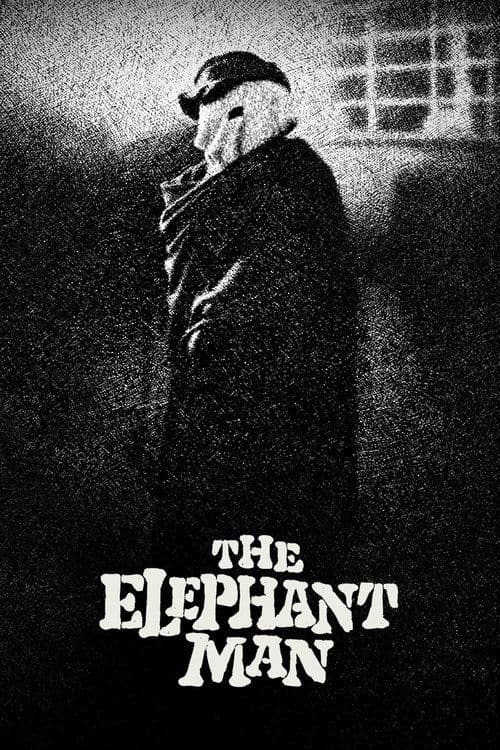
John Merrick — the severely deformed Victorian man exhibited as a carnival freak — is rescued by a London surgeon and discovers, for the first time, a life of dignity and human connection. Lynch's most emotionally direct film uses black-and-white imagery to ask what humanity actually requires.
The Elephant Man
David Lynch · 1980
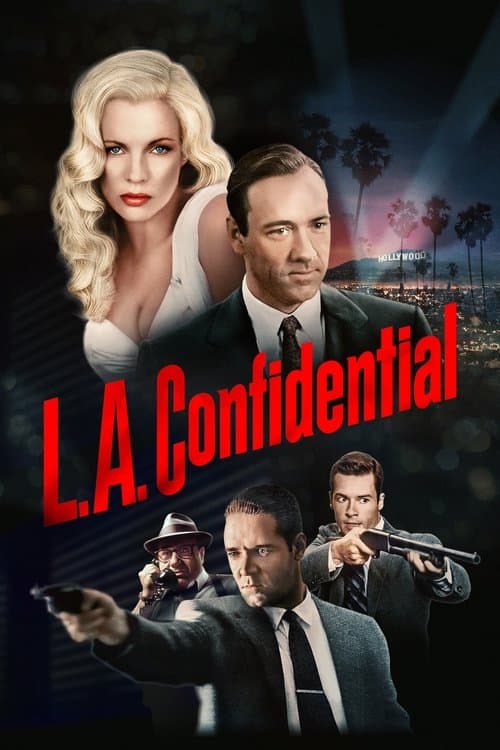
Three Los Angeles detectives with conflicting methods — a brutal enforcer, an ambitious opportunist, and a straight-arrow idealist — converge on a conspiracy connecting a celebrity tabloid, a prostitution ring, and a massacre at an all-night diner. Curtis Hanson's neo-noir is a love letter to and indictment of 1950s Los Angeles.
L.A. Confidential
Curtis Hanson · 1997