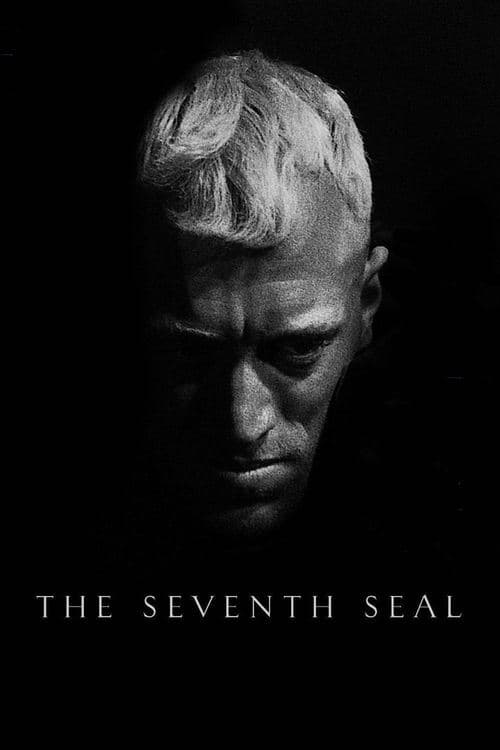
The Seventh Seal
Ingmar Bergman · 1957
A medieval knight returning from the Crusades plays chess with Death, desperate to find proof of God's existence before he dies. Bergman's most iconic film uses the Middle Ages as a screen onto which postwar European existentialism is projected.
Techniques Used
5 techniques identified in this film
Death as Personified Interlocutor
NarrativeLiteralizing the philosophical concept of mortality as a character — a person who can be spoken to, argued with, and played against — transforming abstract existential inquiry into dramatic encounter.
How this film uses it
Bergman's Death is not a symbol but a presence: pale, black-robed, but entirely conversational. The chess game means that mortality is not inevitable in the simple sense — it can be delayed, negotiated, gambled. The film asks whether it matters that we argue with death if we already know the result.
Medieval Modern Allegory
NarrativeUsing a historical period — its plague, its religion, its social collapse — as an allegory for contemporary anxieties, making the distance of history a way of examining things too close to discuss directly.
How this film uses it
The film was made ten years after Hiroshima, in the shadow of the Cold War and nuclear threat. The 14th-century plague is the mid-20th century bomb; the silence of God is the silence of any force that might prevent annihilation. Bergman's medieval setting is transparent — the contemporary anxiety is the point.
Tableau Composition Grammar
CinematographyArranging figures in formally composed, static shots that evoke the visual grammar of medieval paintings — treating the frame as a panel rather than a window, history as art rather than documentary.
How this film uses it
Gunnar Fischer's photography consistently arranges figures in compositions that quote medieval illustration: the silhouettes against the sky, the processions, the chess game at the edge of the sea. The visual grammar says: this story belongs to the history of images, not just the history of events.
Impossible Quest Structure
NarrativeOrganizing a film as a quest for something that cannot, by the story's own logic, be found — the quest's impossibility being the film's argument rather than its failure.
How this film uses it
The knight seeks proof of God's existence in a world where God's existence is precisely what cannot be proven. The chess game is his method: by delaying death long enough, he hopes to perform an act that demonstrates meaning. Bergman's point is that the quest is not defeated — it was always impossible, and knowing this is wisdom.
Theological Silence Design
SoundTreating silence itself as the film's answer to its central question — the absence of divine response given the weight, duration, and deliberateness of a spoken answer.
How this film uses it
When the knight asks God for proof — shouting into the church, speaking to the painting on the wall — what he receives is silence. Bergman designs this silence with care: it is not absence of sound but the presence of a particular kind of nothingness. The silence is the theological statement.
You Might Also Like
Films that share at least one technique with The Seventh Seal
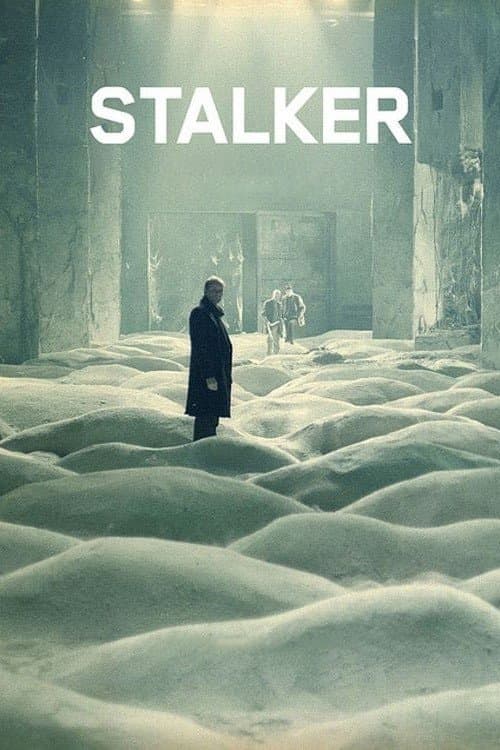
A guide called the Stalker leads a Writer and a Professor through a forbidden wasteland called the Zone, toward a room that is said to grant one's deepest wish. No one can agree on whether the Zone is real, dangerous, or spiritual. One of cinema's most sustained meditations on faith, desire, and the nature of art.
Stalker
Andrei Tarkovsky · 1979

Sir Gawain, nephew to King Arthur and as yet unchivalrous, accepts a challenge from a mysterious Green Knight — strike him once and face the same blow in a year — and sets out on a journey toward a destiny he is determined to flee. David Lowery's adaptation strips Arthurian legend into a meditation on honor, cowardice, and what it means to become worthy.
The Green Knight
David Lowery · 2021
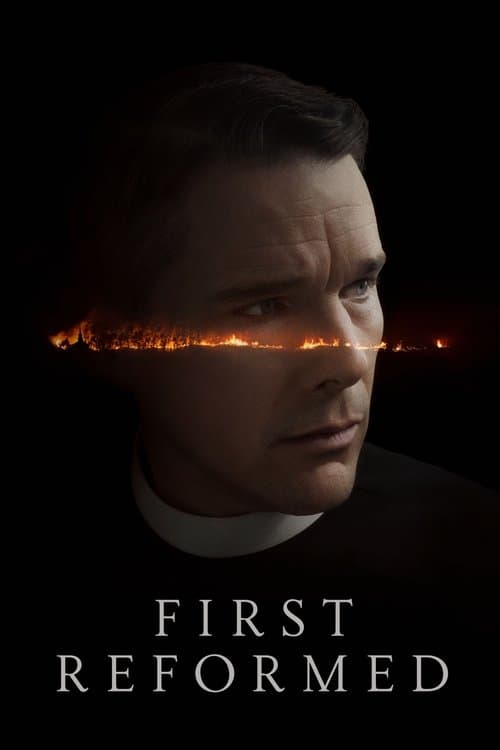
A minister at a small historic Dutch Reformed church in upstate New York counsels a young environmental activist and is radicalized by his encounter with ecological despair — moving toward an act of violence that he frames as spiritual self-immolation. Paul Schrader's film is a diary of a man in theological crisis.
First Reformed
Paul Schrader · 2017