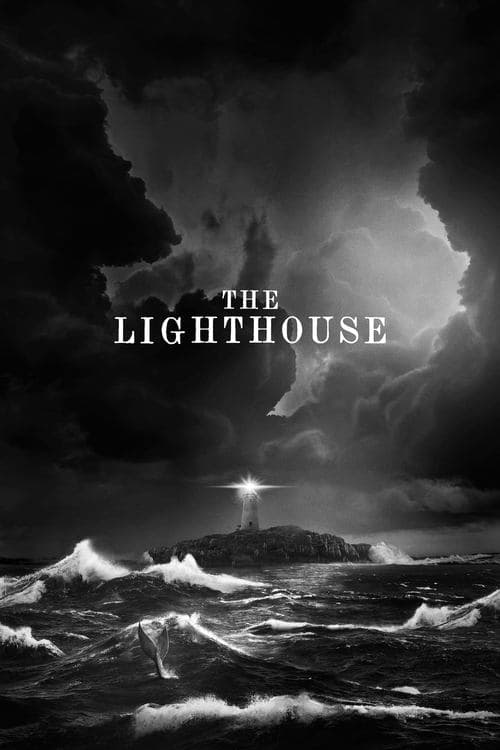
The Lighthouse
Robert Eggers · 2019
Two lighthouse keepers — a grizzled veteran and a young laborer — are stranded on a remote New England rock when a storm extends their posting indefinitely, and their cohabitation descends into madness, violence, and myth. Robert Eggers uses the confined setting as a pressure cooker for every masculine anxiety the nineteenth century produced.
Techniques Used
5 techniques identified in this film
Single-Location Cinematography
CinematographyConfining the entire film to a single space — using its architecture, its limits, and its furniture as the film's only dramatic environment.
How this film uses it
The lighthouse island is the film's entire world: the tower, the quarters, the rocks, and the surrounding sea. Eggers uses extreme spatial constraint as psychological pressure — the two men cannot separate, cannot leave, cannot escape the proximity that is destroying them. The location is the film's antagonist.
Psychological Doubling
PsychologyConstructing two characters as structural mirrors — sharing drives or psychological profiles that make them equivalents whose difference is context rather than essence.
How this film uses it
Thomas Wake and Ephraim Winslow begin as master and servant and end as indistinguishable in their madness and mythology. Eggers structures the doubling as a merger: what starts as hierarchy becomes, under the island's pressure, a single psychological system inhabiting two bodies.
Constructed Sound Language
SoundBuilding a film's sonic world from a specific, internally consistent vocabulary of sounds — so that the audience learns to read auditory information as precisely as visual information.
How this film uses it
Mark Korven builds the score from foghorn, wind, sea, and industrial machinery — sounds diegetic to the lighthouse but deployed as expressionist horror. The foghorn becomes a psychological instrument: its repetition marks not time but the accumulation of dread. The audience learns to dread it the way the characters do.
Unreliable Reality
PsychologyMaintaining narrative ambiguity about whether fantastical events are literally occurring or are products of a character's psychological state — so that the film cannot be resolved into fantasy or realism.
How this film uses it
Winslow's visions — the mermaid, the tentacles, the light's interior — could be alcoholic hallucination, isolation psychosis, or literal mythological encounter. Eggers refuses resolution. The film's final image requires both interpretations simultaneously to function.
Black-and-White as Moral Urgency
CinematographyShooting in black and white not for nostalgia but as a formal argument — stripping color to expose structure, power, and moral weight that surface realism might obscure.
How this film uses it
Eggers shoots in black and white with a near-square 1.19:1 aspect ratio — the format of nineteenth-century photography. The monochrome removes the film from naturalism into the register of fable, where the events are elemental conflict rather than psychological case study.
You Might Also Like
Films that share at least one technique with The Lighthouse
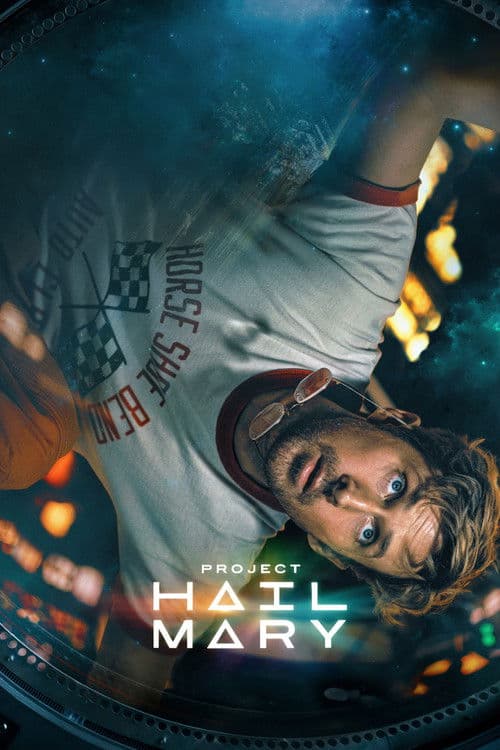
An astronaut wakes up alone on a spacecraft with no memory, slowly piecing together that he is humanity's last hope against an extinction-level threat. A first-contact survival story that finds warmth and humor in the void of deep space.
Project Hail Mary
Phil Lord & Christopher Miller · 2026
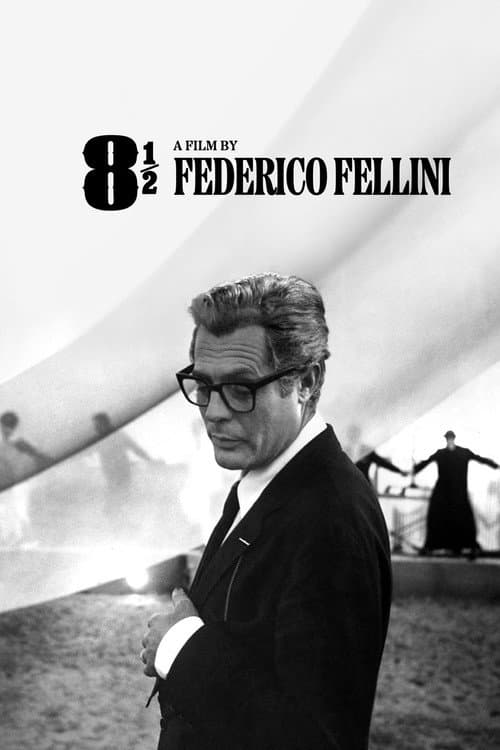
A film director paralyzed by creative block retreats to a spa, where his memories, fantasies, and present reality blur into each other. Fellini's most personal film uses cinema's tools to examine what it means to be an artist who has run out of things to say.
8½
Federico Fellini · 1963

A programmer is invited to his company's CEO's remote estate to administer a Turing test on an AI with a humanoid body — and finds that the real test may not be the one he was told about. A film about consciousness, manipulation, and the Turing test's most dangerous implication.
Ex Machina
Alex Garland · 2014