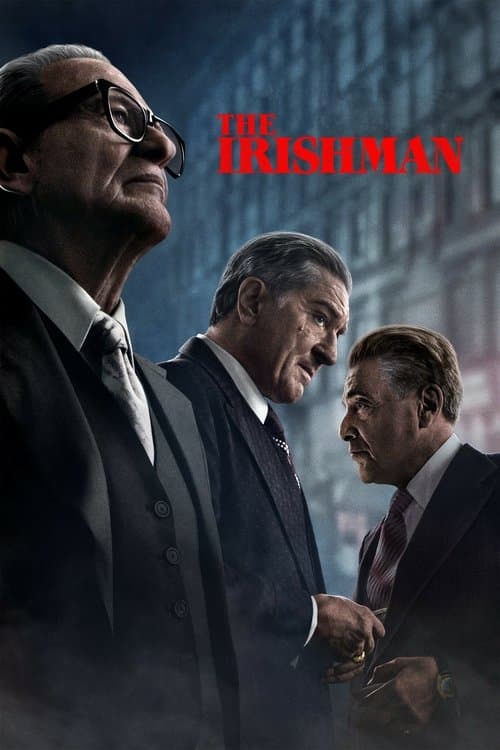
The Irishman
Martin Scorsese · 2019
Frank Sheeran, a WWII veteran turned mob hitman, recounts his life of organized crime — including his alleged role in the disappearance of Jimmy Hoffa — from the vantage point of a nursing home. Scorsese's three-and-a-half-hour elegy is less interested in crime than in what a life of it leaves behind.
Techniques Used
5 techniques identified in this film
Retrospective Voiceover
NarrativeA narrator who recounts events from a temporal distance, framing the story as memory or history.
How this film uses it
Frank narrates the entire film from a nursing home wheelchair — the retrospective frame making every murder feel like confession, the audience positioned as priest in an unwanted sacrament.
Voiceover as Seduction
NarrativeUsing first-person narration to draw the viewer into a character's self-justifying worldview.
How this film uses it
Frank's narration is matter-of-fact, methodical, and devoid of remorse — Scorsese's achievement is that the flatness is more damning than any confession, making complicity in the perspective unavoidable.
Non-Linear Narrative
NarrativePresenting story events out of chronological order to create suspense, reveal character, or mirror psychological states.
How this film uses it
The road trip to Hoffa's wedding anchors recursive flashbacks that layer time over time — Scorsese moving between decades with only the digital de-aging of actors as a visual cue.
Death Foreshadowing Through Objects
NarrativePlacing objects in early scenes that carry lethal significance when they reappear later.
How this film uses it
The film repeatedly cuts to brief text cards announcing the fates of men we have just met — 'murdered, 1975' — giving every handshake and conversation a prospective weight that accumulates into dread.
Kinetic Editing
EditingRapid, rhythmically charged editing that carries the viewer through sequences of action or information on the energy of the cut itself.
How this film uses it
Scorsese's trademark montage — rapid cuts through years of mob ritual, fish deliveries, and backseat negotiations — compresses decades of crime into a few electrifying minutes.
You Might Also Like
Films that share at least one technique with The Irishman

The founding of Facebook is reconstructed through two simultaneous depositions — a legal process that reveals how a social network built to connect people was created by someone who could not. Fincher's film moves at the speed of thought and uses Aaron Sorkin's dialogue as a weapon.
The Social Network
David Fincher · 2010
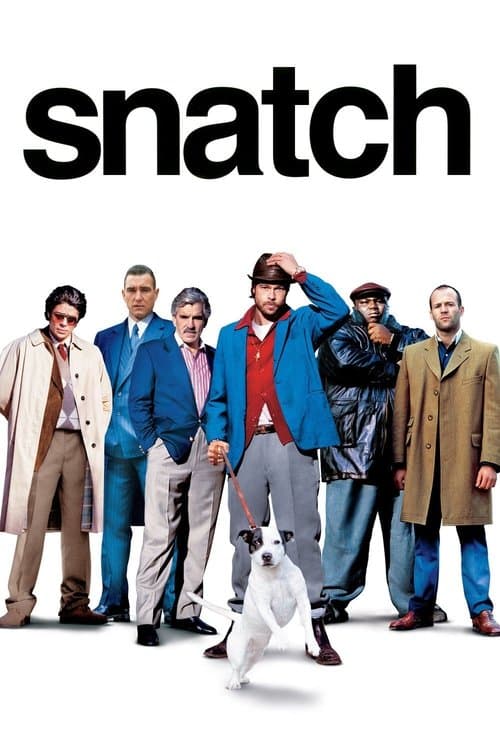
A stolen diamond, a bare-knuckle boxing match, and a series of spectacularly unlucky criminals converge in a chaos of escalating misfortune across London's criminal underworld. Guy Ritchie's second feature is a machine for controlled disorder — every complication is the setup for a worse complication.
Snatch
Guy Ritchie · 2000
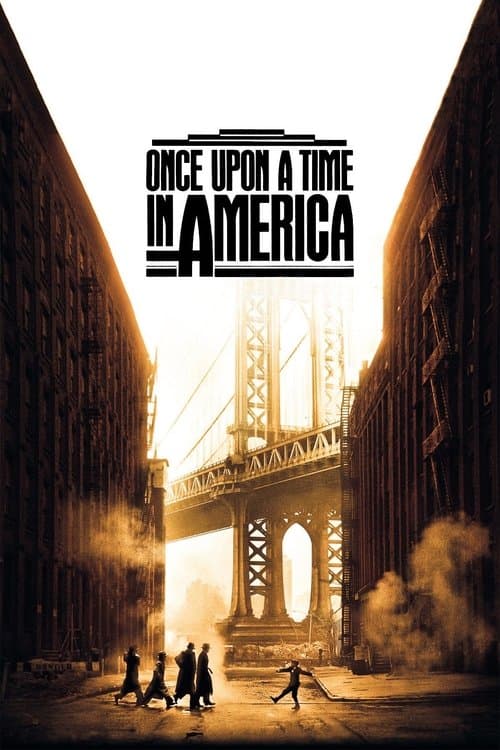
David 'Noodles' Aaronson returns to New York decades after betraying his gang, piecing together a life of crime, friendship, and loss across three eras of the twentieth century. Leone's final film uses the gangster epic as a vehicle for exploring memory, guilt, and the impossibility of returning to a past that was already being destroyed as it was lived.
Once Upon a Time in America
Sergio Leone · 1984