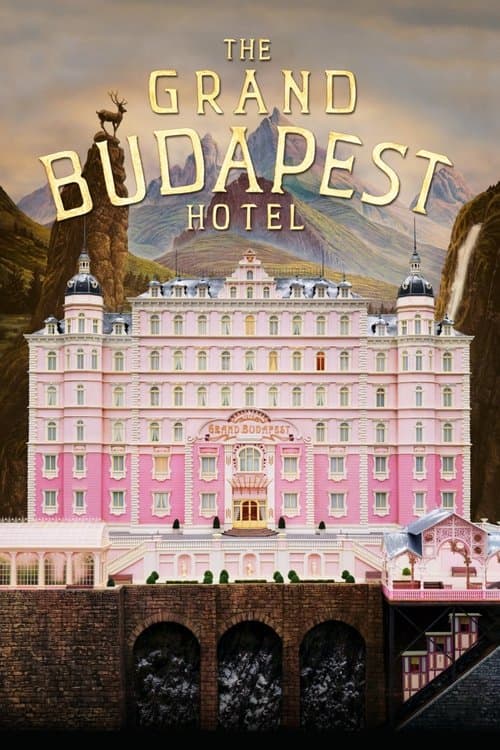
The Grand Budapest Hotel
Wes Anderson · 2014
A legendary hotel concierge and his lobby boy are embroiled in the theft of a priceless painting and a family inheritance battle in a fictional European republic between the wars. Wes Anderson's most fully realized comedy uses nostalgia as a frame for examining what is lost when elegance is replaced by brutality.
Techniques Used
4 techniques identified in this film
Frame Narrative as Trap
NarrativeA nested framing structure in which each layer of narration is itself unreliable or compromised, so that the story the audience finally reaches has passed through multiple filters of memory and storytelling.
How this film uses it
A girl reads a book; the book is by an Author; the Author recalls meeting Zero; Zero tells the story of Gustave. We are four layers deep before we reach the events of the film. Each frame is an act of transmission and loss — the story of Gustave exists only as a story about a story about a story, and Anderson makes this nostalgia's central sadness.
One-Point Perspective
CinematographyComposing shots so that lines of perspective converge on a single central point, creating a symmetrical, formally controlled visual world that emphasizes order, artifice, or institutional authority.
How this film uses it
Anderson composes nearly every shot in the film along a central axis — corridors, lobbies, mountain railways, prison cells. The one-point perspective gives the film its visual argument: this is a world of extraordinary formal order about to be destroyed by history. The symmetry is beautiful and fragile, which is the film's emotional thesis.
Deadpan Absurdism
NarrativeA tonal register in which bizarre, violent, or impossible events are presented with complete seriousness and straight-faced delivery, the comedy arising from the gap between content and presentation.
How this film uses it
Gustave H. recites poetry at gunpoint. A severed finger is found in a pastry box. A prison escape is planned with characteristic hotel precision. Anderson never breaks the tone — no one winks. The film's absurdity is treated with the same formal seriousness as its genuine pathos, making both more powerful.
Period Color Separation
CinematographyUsing distinct color palettes to separate historical periods within a film, making visual grammar carry temporal meaning.
How this film uses it
Anderson shoots each temporal layer in a different aspect ratio and color palette: the 1968 sequences in cool 1.85:1; the 1930s sequences in warm, Technicolor-adjacent 1.33:1; the framing sequences in contemporary 1.85:1. The color and ratio shifts make time travel legible without a single title card.
You Might Also Like
Films that share at least one technique with The Grand Budapest Hotel
The legendary concierge of a grand European hotel is embroiled in the theft of a priceless painting and a murder accusation following the death of a wealthy patron, all recounted decades later by the lobby boy he trained. Anderson's most exuberant film uses the machinery of farce to make an argument about what civilization loses when elegance is replaced by brutality.
The Grand Budapest Hotel
Wes Anderson · 2014
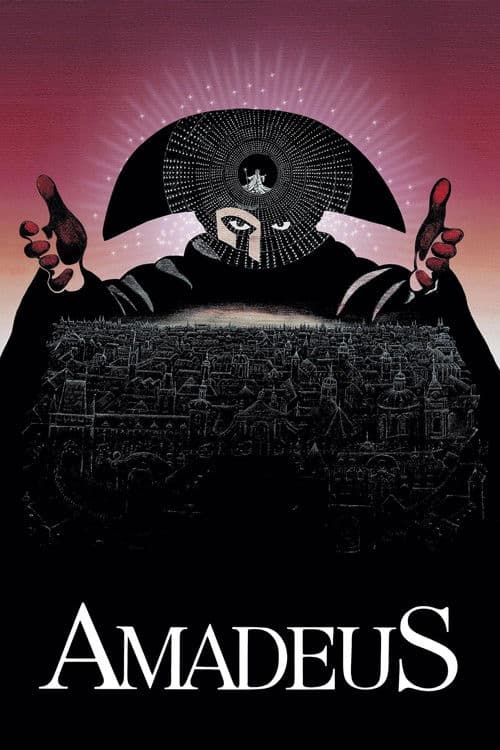
An aging Antonio Salieri confesses to a priest his belief that he murdered Wolfgang Amadeus Mozart — driven mad by the injustice of God giving divine genius to a vulgar, giggling man-child while leaving him only mediocrity. A film about talent, envy, and the cruelty of being almost gifted.
Amadeus
Miloš Forman · 1984
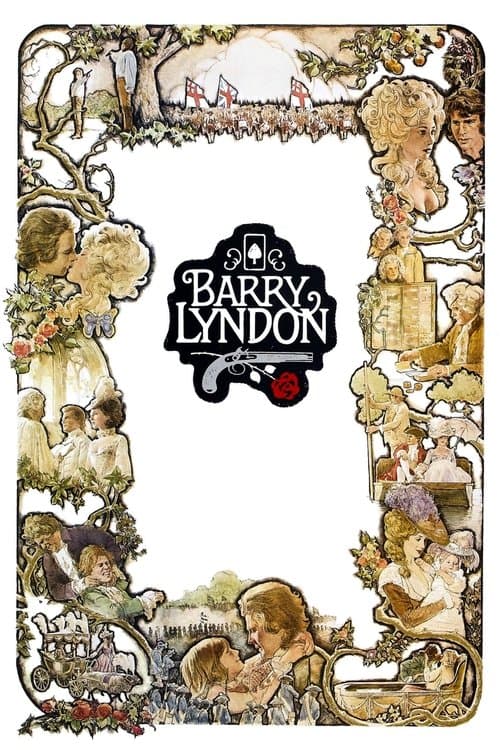
An Irish rogue rises through 18th-century European society by charm, luck, and cunning — and loses everything he gained through arrogance, indolence, and cruelty. Kubrick's most formally beautiful film uses candlelight and narration to tell a story of hollow ambition.
Barry Lyndon
Stanley Kubrick · 1975