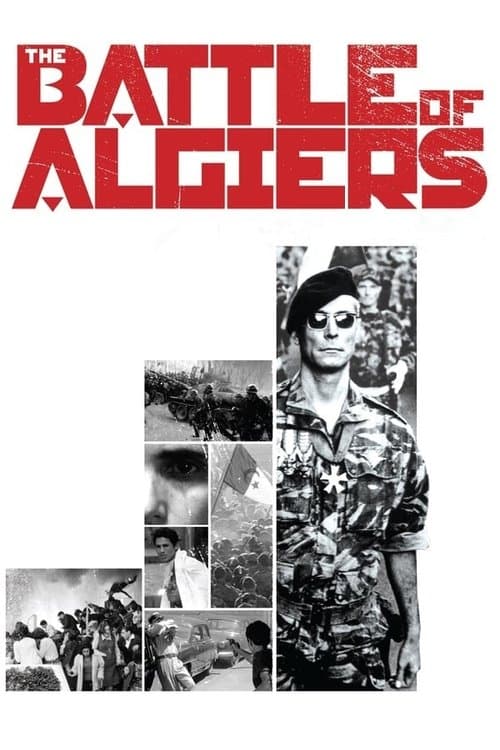
The Battle of Algiers
Gillo Pontecorvo · 1966
The Algerian National Liberation Front wages an urban guerrilla campaign against French colonial rule in 1950s Algiers, documented with the impartiality of a film that refuses to assign guilt to either side of a colonial war. Pontecorvo's film was so realistic it had to include a disclaimer that no newsreel footage was used.
Techniques Used
5 techniques identified in this film
Handheld Documentary Texture
CinematographyUsing handheld camera movement to create physical immediacy — the camera's instability communicating the body's presence in a scene and granting documentary-like authenticity to staged events.
How this film uses it
Pontecorvo and cinematographer Marcello Gatti used handheld cameras and high-contrast black-and-white stock typically associated with newsreel footage. The film was so convincingly documentary in texture that distributors had to add a title card specifying that no archival footage had been used.
Non-Professional Cast Authenticity
CinematographyCasting non-actors — community members, workers, local residents — whose physical presence, behavioral specificity, and social authenticity root a film in an irreproducible social reality.
How this film uses it
Pontecorvo cast FLN member Saadi Yacef as a fictionalized version of himself, alongside Algerian civilians playing roles continuous with their actual historical experience. The non-professional cast grants the film an ethical and political specificity that professional actors could not have approximated.
Perpetrator Perspective
NarrativeForcing a protagonist to participate in or witness the system's violence — making complicity a structural theme rather than a moral accusation directed at any individual character.
How this film uses it
Pontecorvo grants equal structural weight to both FLN bombers and French paratroopers, showing the logic of each side's violence without endorsing either. The film refuses the binary of heroism and villainy: both the resistance and the colonial state are shown from inside their own justifications, making the audience carry the weight of both perspectives.
Siege Cinema
CinematographyStaging military or political conflict as a contest over physical space — using the geography of streets, buildings, and borders as the film's dramatic terrain.
How this film uses it
The Casbah's winding, labyrinthine geography is the film's primary dramatic space: a territory the French cannot effectively control because its complexity defeats their military logic, and a space the FLN defends because its geography is itself a form of resistance. Control of the Casbah is the battle's actual objective.
Institutional Architecture
NarrativeRepresenting the antagonist force not as individual villains but as an institutional system — showing its press conferences, its procedures, its internal logic as the actual source of the film's conflict.
How this film uses it
The French colonial apparatus — its press conferences, its military briefings, its legal procedures, its torture chambers — is shown as a coherent institutional system that cannot be reformed from within because its violence is not aberrant but procedural. The paratroopers are not villains; they are functionaries of a system that is.
You Might Also Like
Films that share at least one technique with The Battle of Algiers

A German industrialist uses Jewish slave labor to run his factory during the Holocaust, then risks everything to save as many lives as possible. Shot in near-total black and white, the film is cinema's most sustained act of bearing witness to atrocity.
Schindler's List
Steven Spielberg · 1993
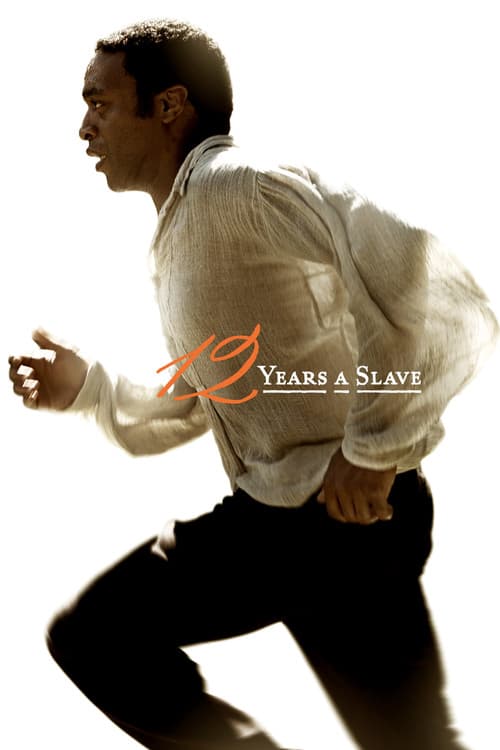
Solomon Northup, a free Black man from New York, is kidnapped and sold into slavery in Louisiana, where he spends twelve years surviving the systematic brutality of the antebellum South before being rescued. Steve McQueen's film refuses every convention of historical suffering — it looks without flinching and does not offer the comfort of resolution.
12 Years a Slave
Steve McQueen · 2013
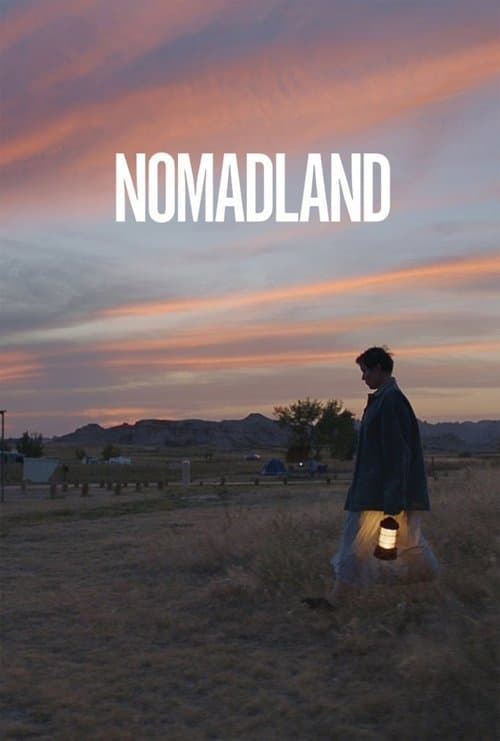
Following the closure of the gypsum plant that sustained her Nevada town, a woman in her sixties takes to the road as a modern nomad — living in a van, working seasonal jobs, finding community among others who have chosen the margins. Zhao's film dissolves the line between documentary and fiction.
Nomadland
Chloé Zhao · 2020