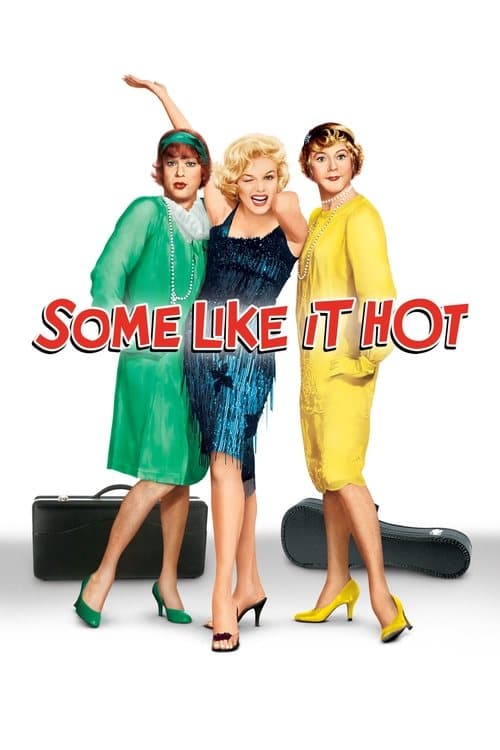
Some Like It Hot
Billy Wilder · 1959
Two musicians witness the St. Valentine's Day Massacre and hide from the mob by joining an all-female band in drag — and one of them falls in love with the band's singer. Wilder's fastest, most accomplished comedy, and the most fully achieved farce in American cinema.
Techniques Used
4 techniques identified in this film
Fish-Out-of-Water Comedy
NarrativeA protagonist placed in an environment they do not belong to — defined by their incompatibility with the world they must navigate — the comedy arising from the sustained mismatch.
How this film uses it
Joe and Jerry are men in an all-female band. The comedy is generated by sustaining the disguise for two hours — every near-discovery, every complication of desire, every new rule of femininity they must navigate. Wilder makes the premise last by keeping the fish genuinely out of water rather than letting them acclimate.
Genre Collage
NarrativeAssembling a film from multiple genre traditions simultaneously — so that the work belongs to several genres at once and uses each genre's conventions to comment on the others.
How this film uses it
The film is simultaneously a gangster film (the massacre and its pursuit), a screwball comedy (the disguise and romantic complications), and a farce (the escalating absurdity of the final act). Wilder transitions between these modes without announcement — a gangster scene can become a comedy scene within the same exchange.
Tonal Bifurcation
NarrativeA film that operates in two incompatible registers — genuine menace and broad comedy — without allowing either to neutralize the other.
How this film uses it
The mob is actually dangerous — the St. Valentine's Day massacre is filmed with real brutality, and the gangsters can and will kill Jerry and Joe. Wilder keeps this threat live while building one of cinema's great comedies. The danger is never dissolved by the comedy; it gives the comedy its stakes and its genuine urgency.
Deadpan Absurdism
NarrativeA tonal register in which increasingly bizarre events are presented with complete straight-faced seriousness, the comedy arising from the gap between content and delivery.
How this film uses it
'Well, nobody's perfect' — the film's final line — is the purest expression of Wilder's approach. Osgood's absolute equanimity in the face of Jerry's revelation is played completely straight. The joke works because neither man breaks; the absurdity is accepted as a simple fact. The film earns its final punchline by maintaining this register for its entire length.
You Might Also Like
Films that share at least one technique with Some Like It Hot
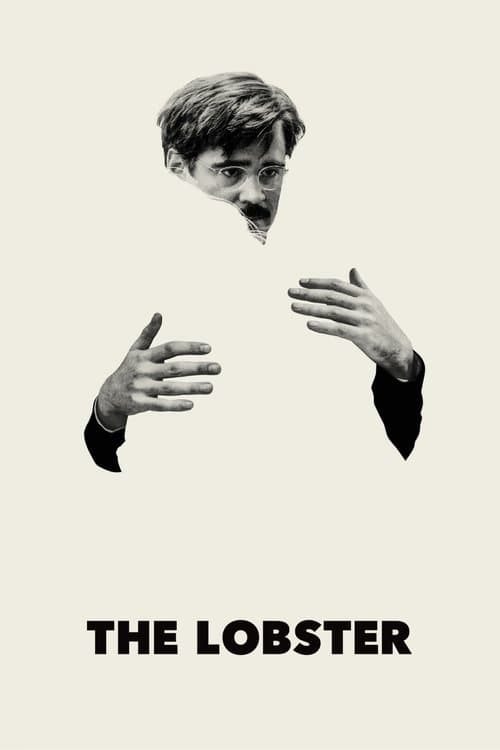
In a near-future society, single people are taken to a hotel where they must find a romantic partner within 45 days or be transformed into an animal of their choosing. Yorgos Lanthimos uses bureaucratic absurdism to examine how society enforces coupling — and what people do to themselves to conform.
The Lobster
Yorgos Lanthimos · 2015

Jeff 'The Dude' Lebowski — an unemployed bowler — is mistaken for a millionaire of the same name and drawn into a kidnapping scheme, a ransom drop, and a series of increasingly surreal encounters with nihilists, pornographers, and Vietnam veterans. The Coen Brothers use the crime genre as a vehicle for the most relaxed philosophical argument in American cinema.
The Big Lebowski
Joel Coen, Ethan Coen · 1998

A Chinese-American laundromat owner discovers she must connect with parallel universe versions of herself to prevent a nihilistic force from destroying the multiverse — and that the only answer is her relationship with her daughter. The defining American film of the 2020s.
Everything Everywhere All at Once
Daniel Kwan, Daniel Scheinert · 2022