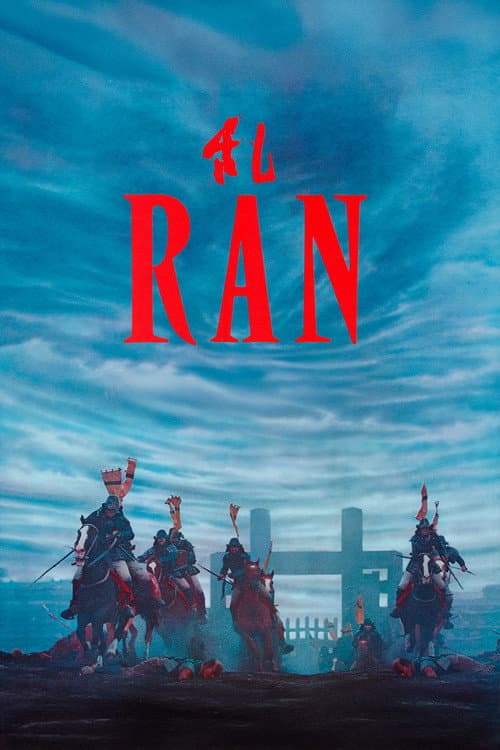
Ran
Akira Kurosawa · 1985
An aging warlord divides his kingdom among his three sons, only to watch them turn against each other and against him. Kurosawa's adaptation of King Lear is the most visually overwhelming film he ever made.
Techniques Used
4 techniques identified in this film
Human Figure in Vast Landscape
CinematographyPlacing human figures as tiny specks in enormous widescreen frames, using the ratio of person to landscape as a visual argument about individual insignificance against historical or natural forces.
How this film uses it
Kurosawa places armies on open hillsides in long shots where soldiers are barely visible against the sky. Hidetora's solitary figure walking from a burning castle is dwarfed by the landscape — the visual grammar insisting that power, pride, and legacy are ultimately small against the indifferent world.
Variable Frame Rate Combat
EditingUsing overcranking and undercranking within the same battle sequence to control the emotional and temporal experience of violence rather than present it at naturalistic speed.
How this film uses it
The siege of the third castle alternates between slow-motion carnage — arrows, fire, bodies falling — and real-time chaos. Kurosawa removes the film's score during the battle entirely, replacing it with Takemitsu's elegiac music, and the variable frame rate gives the violence a dreamlike, mournful quality.
Leitmotif
SoundA recurring musical theme attached to a character, place, or idea that returns and transforms as the narrative develops.
How this film uses it
Toru Takemitsu's score assigns distinct sonic identities to each of Hidetora's sons. Lady Kaede's theme is all tension and suppressed menace. The father's theme begins as stately authority and gradually deteriorates into discordant fragments as his mind fails — the music charting the psychological collapse the visuals only partially show.
Tragic Inversion Structure
NarrativeA narrative in which a character's greatest strengths become the direct cause of their destruction — the arc moving from power to ruin through the very qualities that produced the power.
How this film uses it
Hidetora built his empire through ruthless conquest and the elimination of rivals. His downfall is caused by his sons — whom he raised in exactly that ruthless tradition. The film's structure makes his suffering a direct consequence of his own history: he taught them everything that destroys him.
You Might Also Like
Films that share at least one technique with Ran
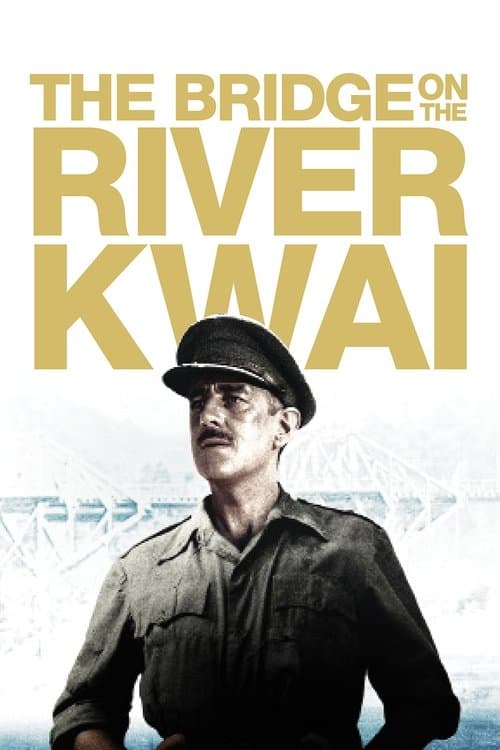
British prisoners of war in a Japanese camp are ordered to build a railway bridge; their commanding officer, Colonel Nicholson, becomes obsessed with building it correctly as a matter of military pride — and loses sight of which side he is on. A study in the madness of honor.
The Bridge on the River Kwai
David Lean · 1957

A Black man visiting his white girlfriend's family for the weekend uncovers a disturbing secret beneath their liberal veneer. A precision-engineered social horror film that uses genre mechanics to externalize systemic racism.
Get Out
Jordan Peele · 2017

A perfectionist ballerina wins the lead in Swan Lake but becomes consumed by paranoia and hallucination as opening night approaches. A psychosexual horror film about the violence of perfectionism and the dissolution of identity.
Black Swan
Darren Aronofsky · 2010