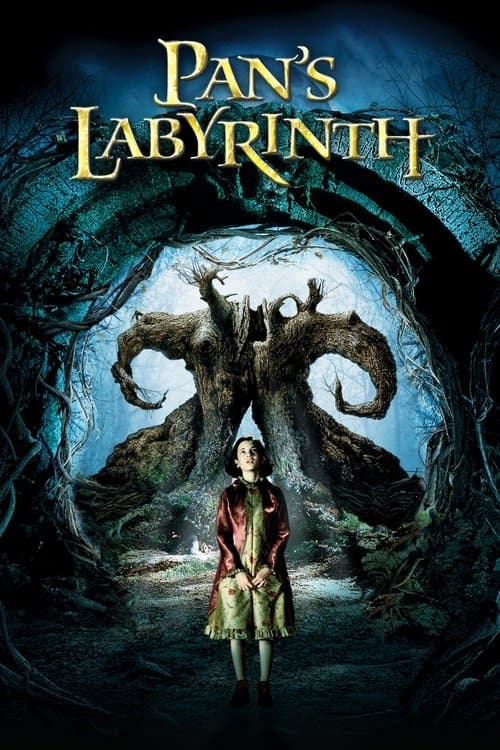
Pan's Labyrinth
Guillermo del Toro · 2006
In postwar Francoist Spain, a young girl retreats into a dark fairy tale world to escape her brutal stepfather — a world the film refuses to confirm as real or imaginary. Del Toro's most complete film uses fantasy and reality as moral mirrors of each other.
Techniques Used
4 techniques identified in this film
Tonal Bifurcation
NarrativeA film that operates simultaneously in two incompatible registers — in this case, realistic brutality and dark fantasy — without allowing either to neutralize the other.
How this film uses it
Del Toro runs two films in parallel: a Spanish Civil War drama of genuine historical violence and a fairy tale of genuine mythological danger. Neither world is safe; neither is escapist. The fantasy does not offer relief from the real — it mirrors and intensifies it. The film's structure refuses any comfortable separation between the two registers.
Unreliable Reality
PsychologyA film whose world is revealed to be potentially subjective — where the audience cannot determine from within the film's logic whether what they see is real or imagined.
How this film uses it
Del Toro never confirms whether the labyrinth and its creatures exist. The faun's chalk door leaves real chalk on the wall; the mandrake root bleeds when burned. But the Doctor and Mercedes cannot see the magic. The film's ambiguity is structural: the fantasy could be Ofelia's coping mechanism or it could be genuinely real, and the film's ending is designed to support both readings simultaneously.
Color Palette as Worldbuilding
CinematographyUsing a distinctive, consistent color palette to construct the film's worlds as emotionally legible spaces — color as an argument about the nature of each reality.
How this film uses it
Del Toro and cinematographer Guillermo Navarro use warm amber and gold for the fantasy sequences and cold blue-gray for the real world. The visual grammar makes the film's moral argument through color: the fantasy world, despite its dangers, has warmth; the real world, despite its social order, is cold. Ofelia's choice between them is also a choice between color temperatures.
Protective Fiction
PsychologyA character maintaining an internal narrative or performance that allows them to survive circumstances that would otherwise be unendurable — the fiction as a psychological survival mechanism.
How this film uses it
Whether or not the labyrinth is real, it allows Ofelia to survive a world in which she is powerless. The fairy tale gives her tasks, identity, and agency she cannot have in the real world. Del Toro presents the fiction as morally necessary — the imagination as the only space in which a child without power can exercise choice.
You Might Also Like
Films that share at least one technique with Pan's Labyrinth
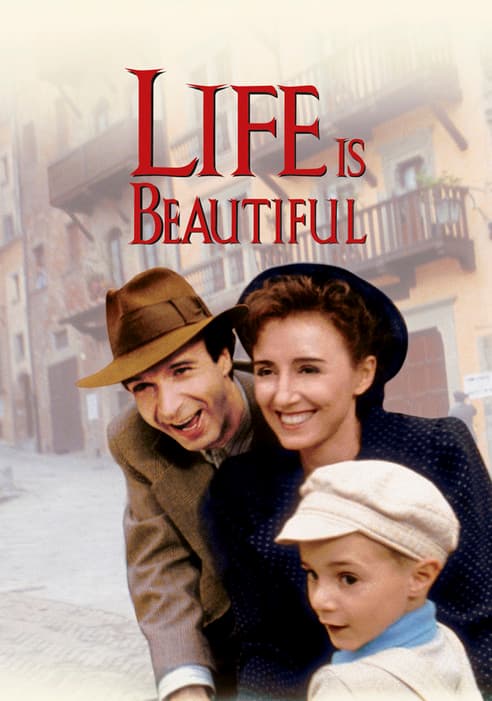
An irrepressibly cheerful Jewish Italian man uses humor and invention to protect his young son from the reality of a Nazi concentration camp by convincing him it is all an elaborate game. A film about love as an act of creative resistance and imagination as a form of survival.
Life is Beautiful
Roberto Benigni · 1997
In postwar fascist Spain, a young girl named Ofelia retreats into an elaborate underground fantasy world while her cruel stepfather commands a military campaign against Republican insurgents. Del Toro's fairy tale is told with absolute moral seriousness — the fantasy is not escapism but the only form resistance can take.
Pan's Labyrinth
Guillermo del Toro · 2006
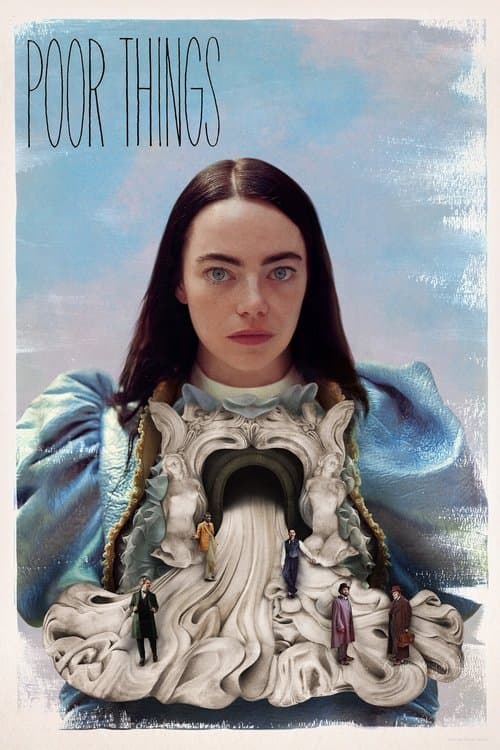
A young woman brought back to life by a brilliant but unorthodox scientist explores the world with the mind of a child growing rapidly into adult consciousness — pursuing pleasure, knowledge, and eventually liberation with absolute freedom from social convention. Lanthimos's most joyful and expansive film.
Poor Things
Yorgos Lanthimos · 2023