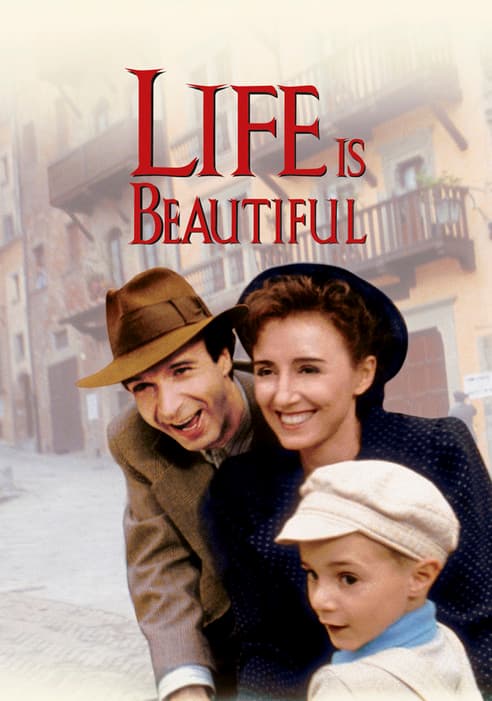
Life is Beautiful
Roberto Benigni · 1997
An irrepressibly cheerful Jewish Italian man uses humor and invention to protect his young son from the reality of a Nazi concentration camp by convincing him it is all an elaborate game. A film about love as an act of creative resistance and imagination as a form of survival.
Techniques Used
4 techniques identified in this film
Tonal Bifurcation
NarrativeDividing a film into two tonally distinct halves — comedy and tragedy, lightness and darkness — so that the second half is amplified by contrast with the first, and the first is retroactively shadowed by knowledge of the second.
How this film uses it
The film's first half is a romantic comedy — Guido courting Dora with elaborate romantic schemes. The second half is a concentration camp survival story. The comedy is not betrayed by the tragedy; it makes the love real enough that the tragedy becomes unbearable.
Protective Fiction
PsychologyA narrative strategy in which a character constructs and maintains a fictional reality for another character to shield them from a traumatic truth — the fiction itself becoming an act of love and protection.
How this film uses it
Guido's 'game' — in which the camp's rules are the rules of a competition for a tank as the prize — is a sustained improvisation under impossible pressure. Every new horror requires a new explanation, and Guido's genius is adapting each detail in real time. The fiction is both absurd and heroic.
Comedy Under Duress
NarrativeUsing comedic performance and comedic situations within genuinely dangerous circumstances to argue that humor is not a retreat from reality but a form of resistance to it.
How this film uses it
Benigni performs comedy in the camp at genuine risk — if Giosué breaks character or the guards understand the joke, both are killed. The comedy is never trivializing: it is costly, improvised, and held together by a father's absolute determination to keep his son innocent.
Off-Screen Atrocity
CinematographyKeeping the worst violence or horror of a situation outside the frame — visible in its effects and heard in its sounds but never directly shown — trusting the audience's imagination and protecting the film's tonal register.
How this film uses it
The camp's systematic murder never appears on screen. We see the smoke, we hear the sounds, we understand the arithmetic — but Benigni refuses to show it directly, keeping the camera aligned with a child's limited view. The horror is present but filtered through innocence.
You Might Also Like
Films that share at least one technique with Life is Beautiful
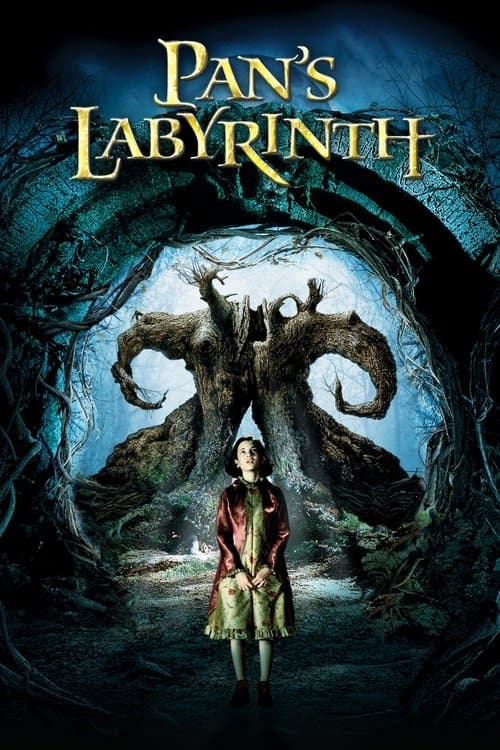
In postwar Francoist Spain, a young girl retreats into a dark fairy tale world to escape her brutal stepfather — a world the film refuses to confirm as real or imaginary. Del Toro's most complete film uses fantasy and reality as moral mirrors of each other.
Pan's Labyrinth
Guillermo del Toro · 2006
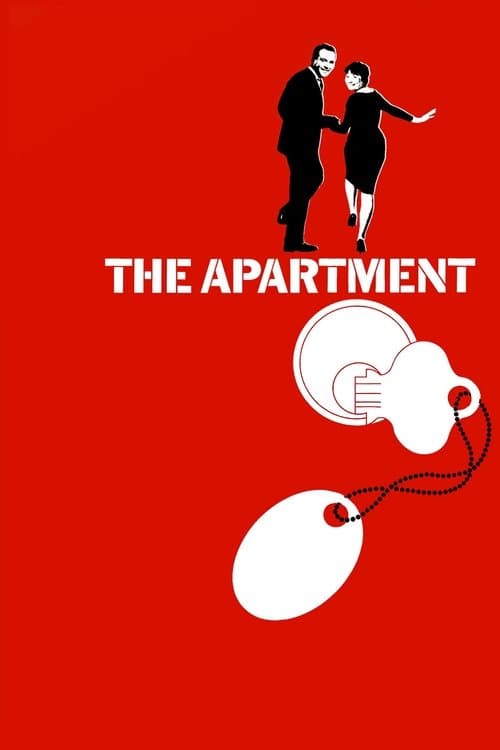
A lonely insurance clerk lends his apartment to his married superiors for their affairs, hoping to advance his career — until his boss's mistress, whom he loves, attempts suicide in his bed. Billy Wilder's masterwork operates simultaneously as a romantic comedy and a film about the loneliness at the center of postwar American ambition.
The Apartment
Billy Wilder · 1960
A junior insurance clerk loans his apartment to his company's executives for their extramarital affairs, hoping for a promotion — until the woman he loves turns out to be one of their mistresses. Wilder's blackest comedy is also his most humane film.
The Apartment
Billy Wilder · 1960