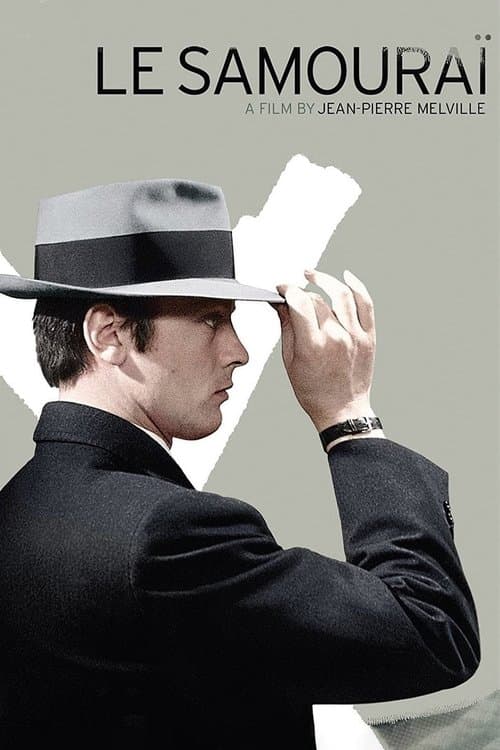
Le Samourai
Jean-Pierre Melville · 1967
Professional hitman Jef Costello carries out a contract killing but is observed leaving the scene — and finds himself caught between police who suspect him and the criminals who hired him. Jean-Pierre Melville strips the crime film to philosophical minimum: a man defined entirely by his code, moving toward an end he has already accepted.
Techniques Used
5 techniques identified in this film
Silent Observation Pacing
NarrativeA narrative mode built on long, quiet scenes — dialogue reduced to formality, real communication happening in gesture, glance, and shared silence.
How this film uses it
Jef Costello speaks perhaps fifty lines in the entire film. Melville builds character through the rituals of preparation, the precision of professional behavior, and sustained observation of a man who communicates almost entirely through action. The silence is not absence but total self-sufficiency.
Ceremonial Pacing
NarrativeTreating narrative movement as ritual — deliberate, rule-governed, and resistant to acceleration — so that progressing through the story carries the weight of ceremony.
How this film uses it
Jef's pre-hit preparations — hat brim adjusted precisely, coat collar raised, gloves put on — are filmed with the solemnity of religious ritual. Melville makes professional routine into ceremony: each step is necessary, exact, and beyond questioning.
Color Palette as Worldbuilding
CinematographyAssigning distinct color palettes to different narrative spaces or states — communicating geography, psychology, and meaning without dialogue.
How this film uses it
Henri Decaë photographs Paris in drained grey-blues — a palette unrelated to the city's actual color and entirely related to Jef's psychology. The world is grey because it has no emotional valence for a man who has excised feeling from his life. The palette is a portrait of interiority.
Character Through Action Introduction
NarrativeIntroducing characters through the specific way they perform their work — professional behavior standing in for biography, character revealed through competence.
How this film uses it
Jef is introduced through his methods: the stolen car, the false alibi construction, the hit itself. Melville provides no backstory, no motivation beyond the code. Who Jef is emerges entirely from how he works — the film's argument that for some people, the work is the self.
Proleptic Opening
NarrativeBeginning a film with images or sequences that anticipate its themes and formal strategies before the story begins.
How this film uses it
The film opens with a forged Bushido epigraph: 'There is no solitude greater than a samurai's, unless perhaps that of a tiger in the jungle.' The epigraph is the film's entire argument stated before it begins — Jef's solitude, his code, and his inevitable end announced in the first image.
You Might Also Like
Films that share at least one technique with Le Samourai
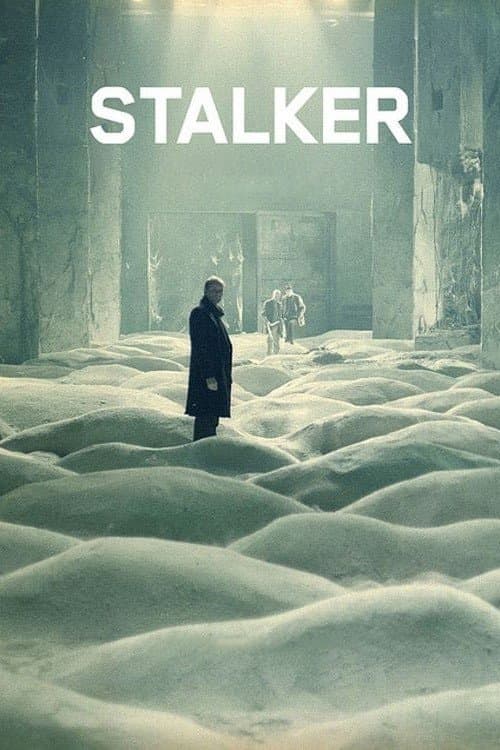
A guide called the Stalker leads a Writer and a Professor through the Zone — a forbidden, seemingly supernatural landscape containing a Room that grants a person's deepest wish. One of cinema's most demanding and rewarding films: a philosophical journey that refuses every destination it promises.
Stalker
Andrei Tarkovsky · 1979
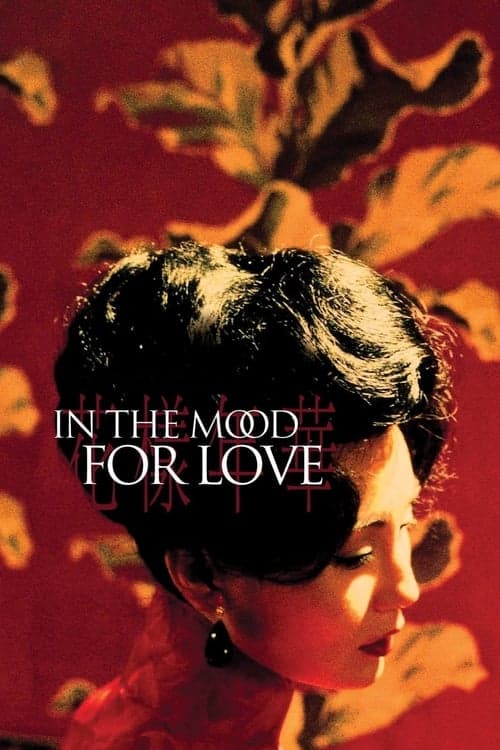
Two neighbors in 1962 Hong Kong discover that their respective spouses are having an affair with each other, and find themselves drawn into an intimate friendship that the era's social codes will not allow to become more. Wong Kar-wai's most restrained film is also his most aching — a love story told entirely in what is withheld.
In the Mood for Love
Wong Kar-wai · 2000

Dani joins her emotionally distant boyfriend and his anthropology friends on a trip to a remote Swedish commune for a midsummer festival that reveals itself, over nine days of relentless daylight, as something ancient and murderous. Ari Aster's folk horror is also a breakup film — the commune offers Dani the grief processing her boyfriend never could.
Midsommar
Ari Aster · 2019