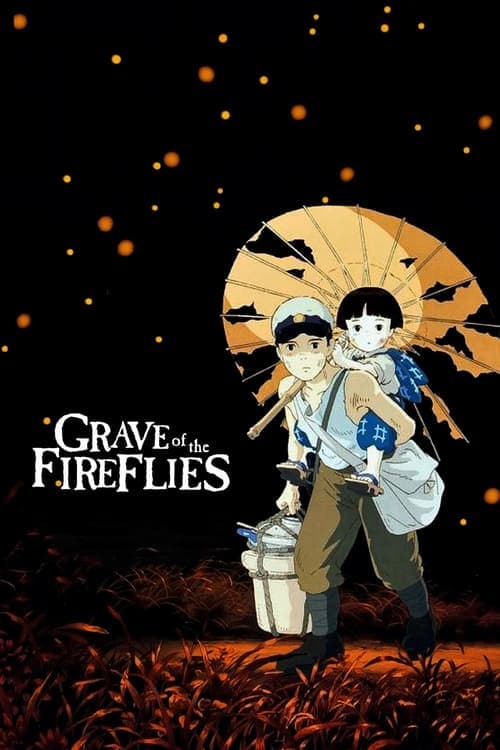
Grave of the Fireflies
Isao Takahata · 1988
Two orphaned siblings try to survive in Japan during the final months of World War II, with the outcome declared in the opening line. An anti-war film experienced entirely from the civilian ground level, using animation to make grief more naked than live-action could.
Techniques Used
4 techniques identified in this film
Proleptic Opening
NarrativeBeginning a film by revealing its ending — the protagonist's death or defeat stated outright before the story begins — transforming the narrative into a requiem rather than a suspense story.
How this film uses it
'September 21, 1945. That was the night I died.' Seita's ghost narrates his own story from its end. The film is not about whether the children survive — we know they don't. It is about witnessing how, and the audience watches every small hope knowing it will not be enough.
Animation as Emotional Amplifier
CinematographyUsing hand-drawn animation not to distance the audience from difficult material but to intensify it — the stylization of the medium allowing emotional expression that live-action realism would aestheticize or naturalize away.
How this film uses it
Takahata and Studio Ghibli's animation renders malnutrition, grief, and death with a directness that live-action would inevitably aestheticize. The hand-drawn faces of the children — their deterioration rendered in soft pencil lines — are more devastating than any live performance could be.
Domestic Scale Anti-War
NarrativeDepicting the full consequences of war entirely through its effects on a single civilian household — refusing military perspective, strategy, or heroism in favor of the ground-level experience of those who have no power in the conflict.
How this film uses it
The war is never shown as a military operation. It is experienced as firebombing, as food rationing, as the indifference of relatives, as the slow extinction of childhood. Takahata's argument is that the civilian cost of war is its real story — and that cost is measured in children.
Firefly Visual Elegy
CinematographyUsing a recurring natural image — beautiful, brief, and fragile — as a visual emblem of the film's subjects, its appearances encoding meaning that dialogue and plot alone cannot carry.
How this film uses it
The fireflies appear in the film's most tender sequences and are associated with Setsuko's joy and innocence. They are also, like her, beautiful and short-lived. When she buries them and asks why things die, the film's entire emotional argument is contained in the image.
You Might Also Like
Films that share at least one technique with Grave of the Fireflies
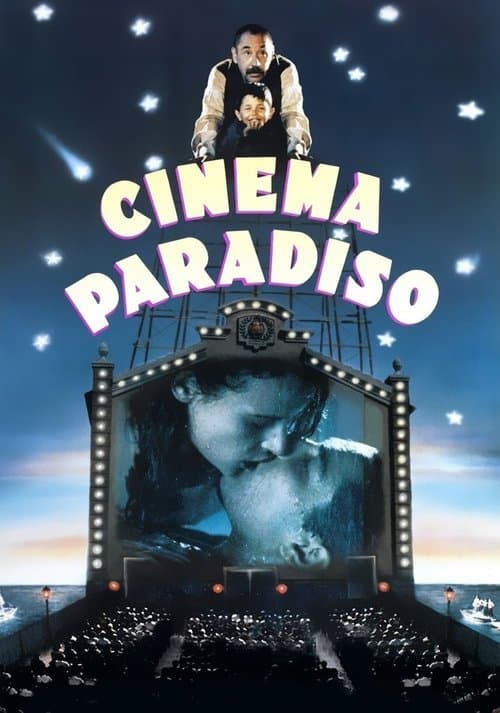
A famous film director returns to his Sicilian village after learning of the death of Alfredo, the projectionist who was his childhood mentor and surrogate father. A film about memory, cinema, and the losses that make us who we are.
Cinema Paradiso
Giuseppe Tornatore · 1988
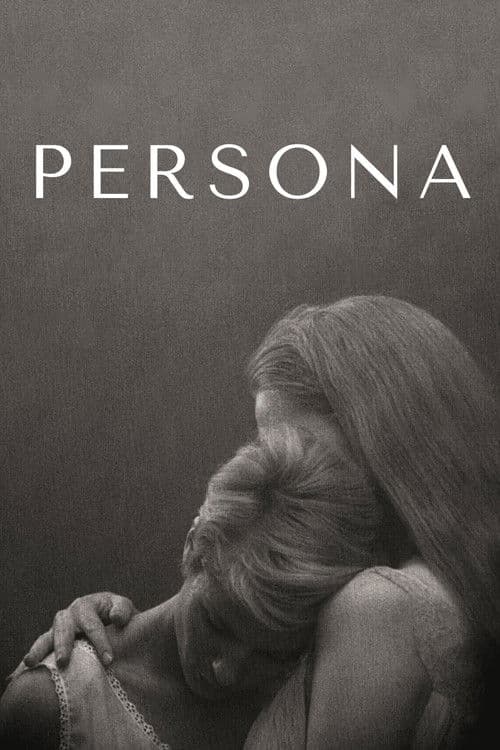
A famous actress abruptly stops speaking and is assigned to the care of a nurse named Alma at a remote seaside cottage, where the boundary between their identities begins to dissolve. Bergman's most formally radical film makes the cinema screen itself the site of psychological collapse.
Persona
Ingmar Bergman · 1966

Dani joins her emotionally distant boyfriend and his anthropology friends on a trip to a remote Swedish commune for a midsummer festival that reveals itself, over nine days of relentless daylight, as something ancient and murderous. Ari Aster's folk horror is also a breakup film — the commune offers Dani the grief processing her boyfriend never could.
Midsommar
Ari Aster · 2019