
Gone Girl
David Fincher · 2014
When Amy Dunne disappears on her fifth wedding anniversary, her husband Nick becomes the prime suspect — until her diary and the investigation reveal that neither of them is the person the other believed. David Fincher's film uses the marriage thriller to dismantle the performance of gender, love, and media innocence.
Techniques Used
5 techniques identified in this film
Unreliable Narrator
NarrativeA narrator whose account of events is shaped by personal bias, psychological disturbance, or limited knowledge — requiring the audience to construct a more accurate version from the gaps and distortions.
How this film uses it
Amy's diary — the film's primary first-person narration — is revealed to be a constructed false document written to frame Nick. Every entry the audience received as intimate confession was performance addressed to future police investigators. The unreliable narrator here is not self-deceiving but deliberately, strategically deceptive.
Nested Unreliable Diaries
NarrativeOrganizing a narrative through multiple layers of nested narration — each frame narrator's account filtered through their own memory, bias, and position — so that the story is always a version of itself.
How this film uses it
The film operates through two unreliable first-person accounts: Nick's present investigation and Amy's past diary. Each is shaped by its author's self-interest. The nested diaries are the film's formal argument: marriage is two people living inside stories they have written about each other and mistaken for truth.
The Long Reveal
NarrativeWithholding a crucial piece of information across a significant portion of the film's runtime — then delivering it in a single moment that retroactively transforms everything preceding it.
How this film uses it
Amy is revealed alive — and as the architect of her own disappearance — at the film's midpoint. The reveal reframes the entire first half: every trace of evidence, every diary entry, every moment of Nick's guilt is now understood as Amy's theater. Fincher deploys the long reveal at half-time, giving himself an entirely new film to build on its foundation.
Parallel Chronology
NarrativeRunning two timelines simultaneously — cutting between past and present so that each informs and recontextualizes the other, the meaning of events in one shifting as the other advances.
How this film uses it
Fincher cuts between Amy's diary past and Nick's present investigation with a rhythm that controls what the audience knows and when. The parallel timelines are the film's argument: Nick and Amy have always been living in different versions of their marriage, the timelines finally and catastrophically converging.
Psychological Doubling
PsychologyConstructing two characters as structural mirrors of each other — sharing drives, disciplines, or psychological profiles that make them equivalents whose difference is context rather than essence.
How this film uses it
Nick and Amy are mirror-images: both perform versions of themselves for each other and for the public. The film's horror is their equivalence — Nick performs innocence for cameras; Amy performs victimhood for investigators. Their marriage is two performers who have finally stopped pretending not to be performing.
You Might Also Like
Films that share at least one technique with Gone Girl

A Korean pickpocket hired to pose as a handmaiden to a wealthy Japanese heiress in colonial Korea begins as part of a con to steal the heiress's fortune — but the con collapses as the two women fall in love. Park Chan-wook tells the story three times, each version revealing what the previous concealed.
The Handmaiden
Park Chan-wook · 2016
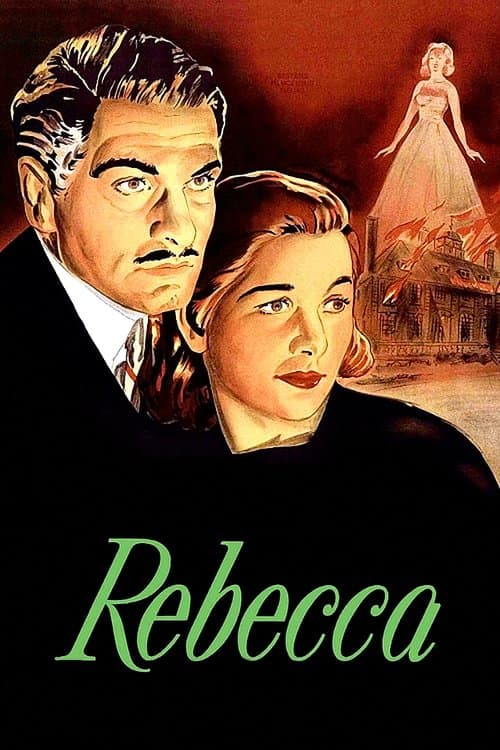
A shy young woman marries a wealthy widower and moves into his imposing Cornwall estate — only to find herself overwhelmed by the presence of his first wife, Rebecca, who seems to inhabit every room and every relationship. Hitchcock's Hollywood debut and his only Best Picture winner.
Rebecca
Alfred Hitchcock · 1940
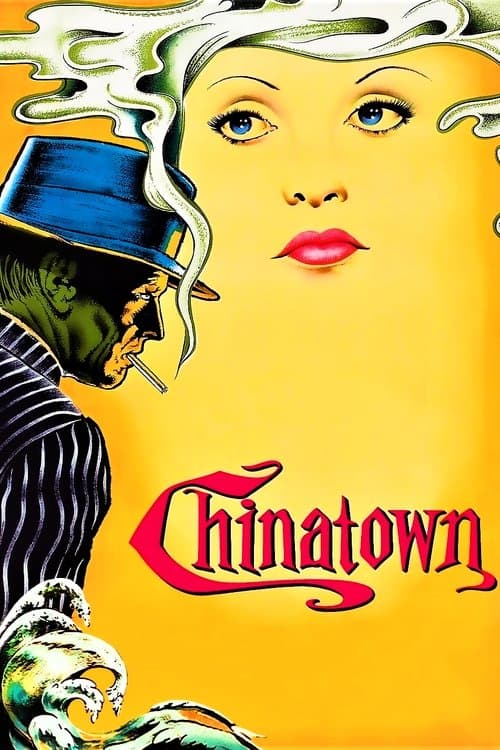
Los Angeles private investigator J.J. Gittes is hired to tail a man's wife and finds himself entangled in a conspiracy of water, power, and incest that reaches the city's most powerful man. Roman Polanski's neo-noir masterpiece dismantles the detective genre's promise of resolution — the investigation succeeds, and everything is destroyed.
Chinatown
Roman Polanski · 1974