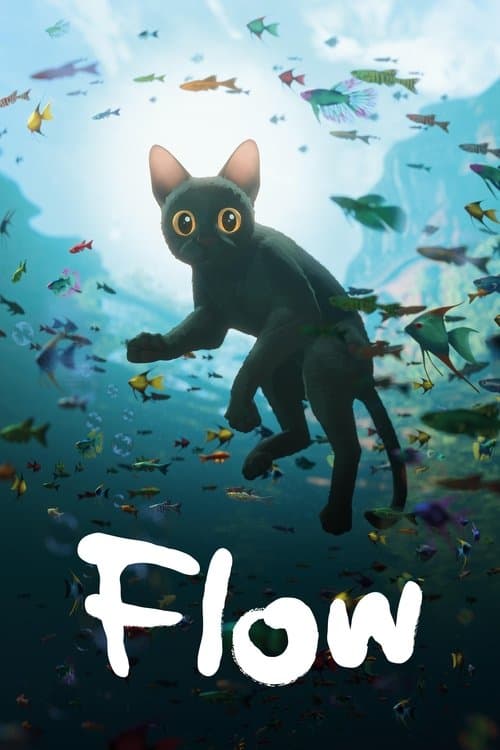
Flow
Gints Zilbalodis · 2024
A solitary black cat survives a mysterious global flood by sharing a boat with a capybara, a lemur, a dog, and a secretary bird — none of them able to communicate in language, all of them dependent on each other. Gints Zilbalodis' entirely wordless Latvian animated film is a fable about coexistence made without dialogue.
Techniques Used
4 techniques identified in this film
Dialogue-Free Opening Act
NarrativeAn extended opening that establishes character, world, and stakes through purely visual and sonic means, without relying on spoken language — here extended to the film's entire runtime.
How this film uses it
Flow contains no dialogue, no human characters, and no explanatory text for its entire eighty-four-minute runtime — the narrative conducted entirely through animal behavior, environmental observation, and the physical logic of a flooded world.
Animation as Emotional Amplifier
EditingThe use of animation's capacity for visual abstraction to access emotional states that live-action realism cannot reach.
How this film uses it
Zilbalodis uses animation to render inter-species communication as a visual language — the cat's flattened ears, the capybara's stillness, the dog's frantic energy — making emotional states legible across species boundaries that live-action could not bridge.
Ecological Animism
NarrativeA worldview embedded in the film's narrative and visual language in which animals and natural entities have consciousness, agency, and moral standing.
How this film uses it
Every animal in the film has a fully rendered interior life — needs, fears, preferences, grudges — the film's entire ethical universe constructed from inter-species relations rather than human values.
Silent Observation Pacing
EditingAn editing rhythm that holds on scenes long enough for meaning to accumulate through observation rather than action, the camera's patience instructing the audience to slow their attention.
How this film uses it
Zilbalodis holds on the animals' faces, the water's surface, and the boat's slow progress with a patience that asks the audience to read stillness as information — the film's pacing an argument about what attentiveness can see.
You Might Also Like
Films that share at least one technique with Flow
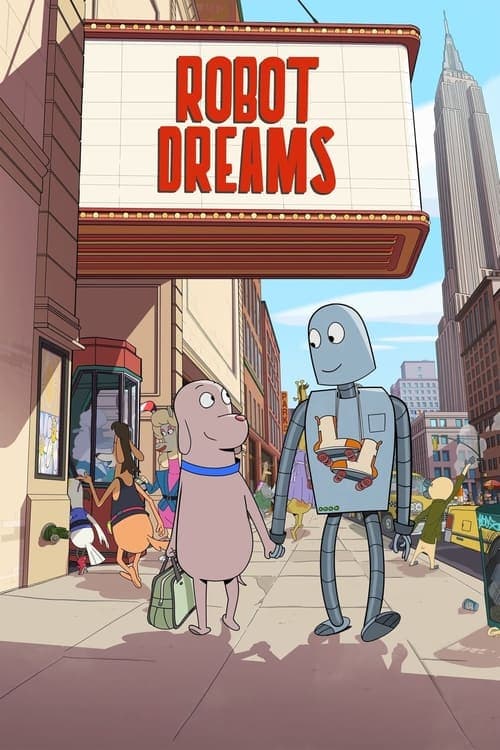
A lonely dog in 1980s New York City builds a robot companion from a mail-order kit, and the two experience a perfect summer friendship before the robot is stranded on a beach and the dog cannot retrieve him — the film tracing their separate attempts to move on. A completely wordless animated film about the persistence of connection.
Robot Dreams
Pablo Berger · 2023
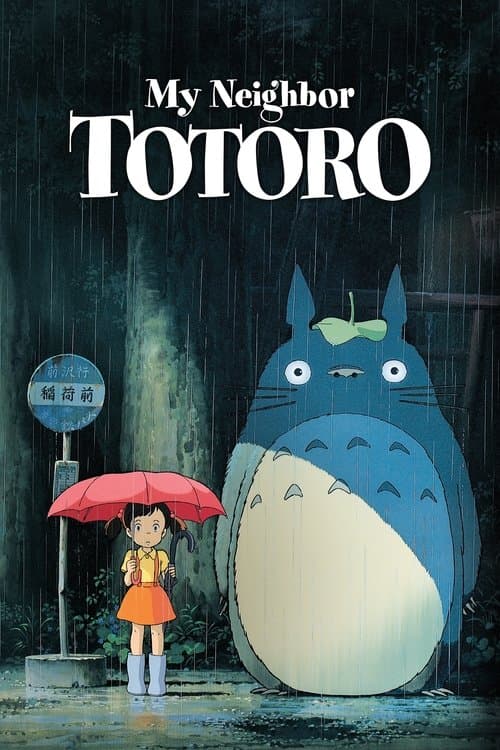
Two young sisters move to the countryside with their father while their mother recovers in hospital, and discover that the surrounding forest is inhabited by gentle, enormous spirits. Hayao Miyazaki's film is a perfect capture of childhood's capacity to find wonder in the ordinary and sustain itself through the extraordinary.
My Neighbor Totoro
Hayao Miyazaki · 1988

A boy grieving his mother's death is lured by a talking grey heron into a mysterious tower and a world between life and death where the dead and the unborn coexist. Miyazaki's return from retirement is a film about grief, inheritance, and the impossible task of building something that will outlast you.
The Boy and the Heron
Hayao Miyazaki · 2023