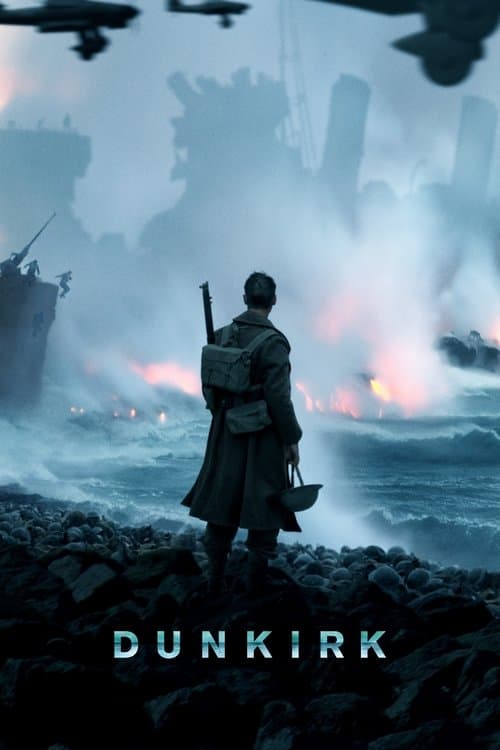
Dunkirk
Christopher Nolan · 2017
The Dunkirk evacuation of 1940 is told simultaneously from three perspectives — land (one week), sea (one day), and air (one hour) — in Christopher Nolan's experiential war film that strips away narrative to leave only sensation and survival. It is cinema as immersive endurance rather than as story.
Techniques Used
5 techniques identified in this film
IMAX Large-Format Space
CinematographyUsing 70mm or IMAX film stock to capture vast physical environments with a scale and resolution that dwarfs conventional cinema.
How this film uses it
The beach sequences and Spitfire dog-fights were shot on 65mm IMAX stock — the scale of the evacuation and the aerial combat only fully registered in the enormous frame.
Parallel Chronology
NarrativeRunning multiple timelines simultaneously, often with different temporal scales, which converge at a single narrative point.
How this film uses it
The three timelines — one week on the beach, one day at sea, one hour in the air — are cut together as though simultaneous, but operate on radically different temporal scales that only align in the final act.
Immersive Combat Sound Design
SoundUsing sound design that prioritizes the physical experience of combat — the body's sonic environment — over narrative clarity.
How this film uses it
Hans Zimmer and sound designer Richard King build the film's soundscape from a ticking watch, Spitfire engines, and stuka sirens — a score that is indistinguishable from the weapons it describes.
Ticking Clock Structure
NarrativeOrganizing a scene or entire film around a countdown that creates escalating tension.
How this film uses it
Each timeline has its own countdown — the week thinning, the day consuming fuel, the hour burning out — and Nolan uses an accelerating musical click to literalize the clock as the film's primary antagonist.
Anti-Epic Combat Staging
NarrativeRefusing the heroic conventions of the war film — individual valor, inspiring speeches, decisive victories — in favor of the chaotic, anonymous, and traumatic reality of combat.
How this film uses it
Nolan never stages a heroic charge or a defining individual act — the evacuation is survival by accumulated small decisions, and the soldier we follow is never named until the film's final moments.
You Might Also Like
Films that share at least one technique with Dunkirk
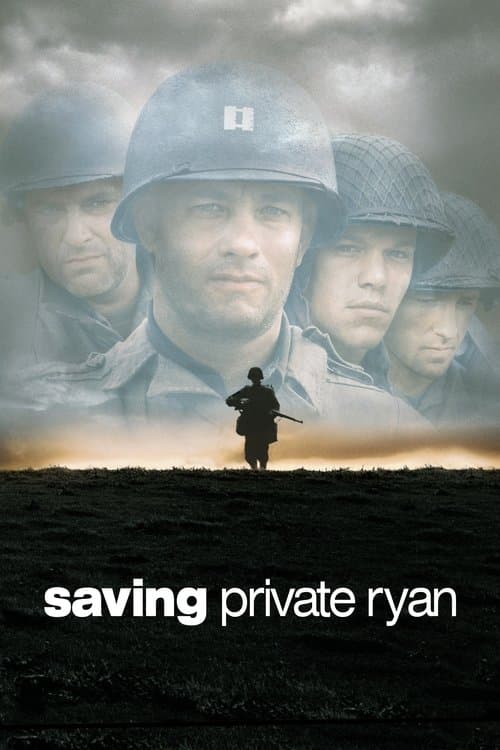
A squad of soldiers is sent behind enemy lines after D-Day to retrieve the last surviving son of a family that has lost four boys in the war. The film's opening twenty-four minutes are the most viscerally honest depiction of combat ever committed to film.
Saving Private Ryan
Steven Spielberg · 1998
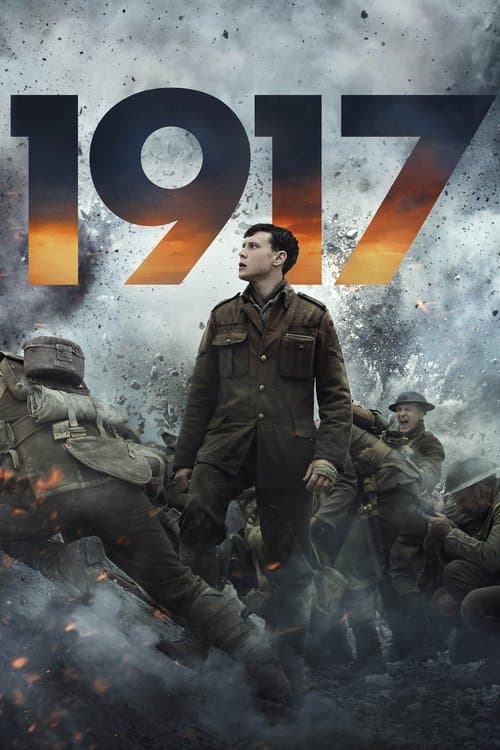
Two British lance corporals are sent across no-man's-land and enemy territory to deliver a message that could save 1,600 soldiers from walking into an ambush. Sam Mendes and cinematographer Roger Deakins construct the film to appear as a single, unbroken take — a continuous journey through landscape as trauma.
1917
Sam Mendes · 2019
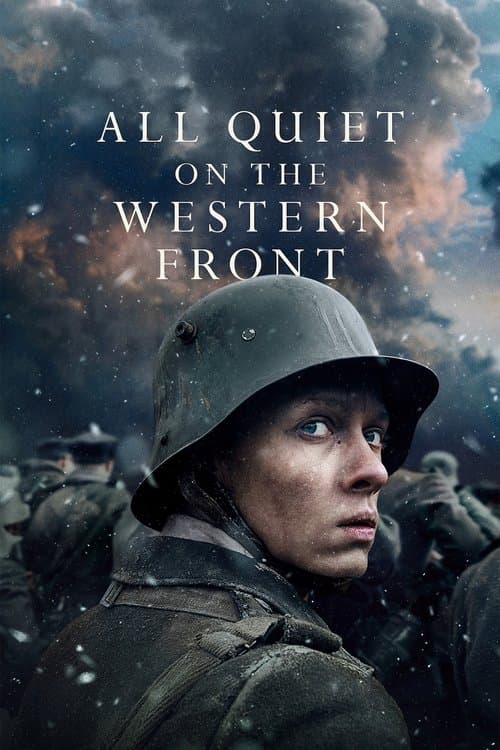
A young German soldier enlists enthusiastically for World War I and discovers the reality of the trenches — mud, terror, attrition, and death without meaning. Berger's version strips Remarque's novel of sentiment and replaces it with a sustained, physically overwhelming argument against the romance of war.
All Quiet on the Western Front
Edward Berger · 2022