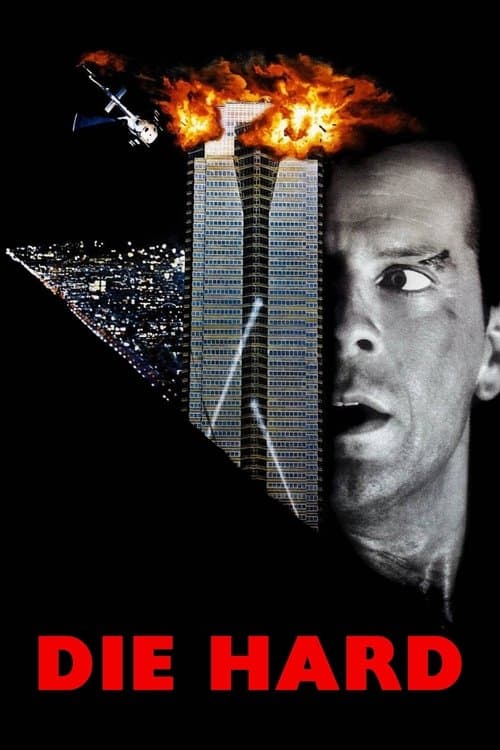
Die Hard
John McTiernan · 1988
New York cop John McClane visits his estranged wife in Los Angeles on Christmas Eve, only to find her office building taken over by a group of thieves posing as terrorists — and must stop them alone while barefoot on broken glass. The film that defined the modern action template.
Techniques Used
4 techniques identified in this film
Single-Location Cinematography
CinematographyThe restriction of a film's action to a single location, using spatial constraint to generate psychological pressure and a complete dramatic environment.
How this film uses it
The Nakatomi Plaza is the film's entire world — McTiernan maps every floor, vent shaft, and rooftop into a spatial grammar the audience can navigate, the building's architecture the film's primary narrative resource.
Ticking Clock Structure
NarrativeA narrative framework built around an escalating deadline that compresses tension and forces characters into accelerating decisions.
How this film uses it
Hans Gruber's vault-cracking operation runs on a precise schedule — police response, FBI arrival, detonator sequence — and McClane's interference keeps disrupting the timeline, the film structured as competing clocks, each faction running against a different countdown.
Kinetic Set Piece Architecture
EditingThe construction of extended action sequences through precise spatial orientation and escalating complications.
How this film uses it
McTiernan constructs each set piece around a clear spatial problem — the roof, the elevator shaft, the parking garage — the geography understood before the complication arrives, the audience able to follow the spatial logic of each solution.
Fish-Out-of-Water Comedy
NarrativeA narrative structure in which a character's inappropriate context — social, cultural, or physical — generates both comedy and a particular form of resourcefulness.
How this film uses it
McClane's Everyman status — a regular cop in a Rolex building, barefoot on broken glass, talking to himself on the radio — is the film's comic and emotional engine, his vulnerability making his victories feel earned in a way that a superhuman protagonist's could not.
You Might Also Like
Films that share at least one technique with Die Hard
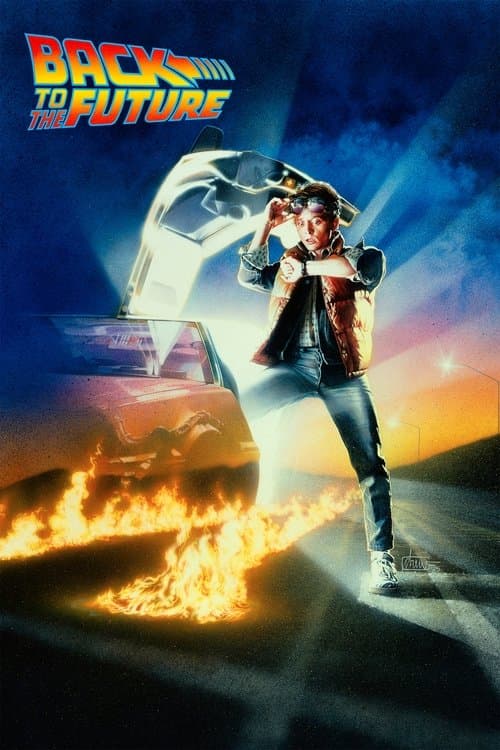
A teenager accidentally travels thirty years into the past and must engineer his parents' first meeting while finding a way home — without erasing himself from existence. A perfectly constructed Rube Goldberg narrative machine in which every element planted in Act 1 pays off in Act 3.
Back to the Future
Robert Zemeckis · 1985
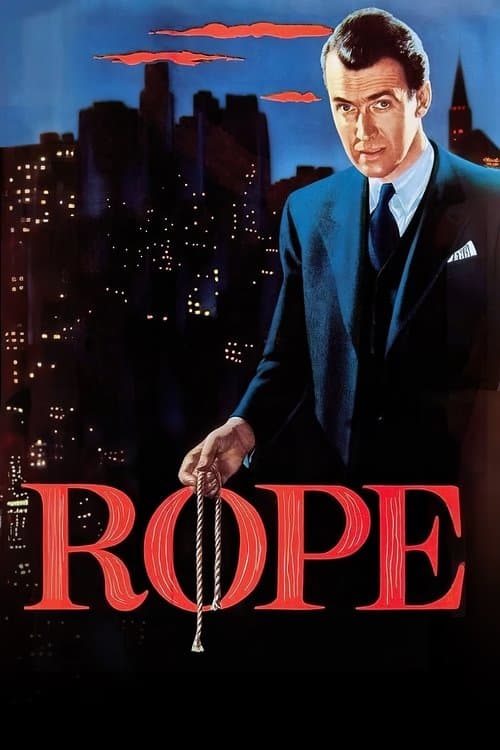
Two young men strangle a former classmate and hide his body in a chest in their apartment, then throw a dinner party for the victim's family and friends — including the prep school housemaster whose Nietzschean philosophy inspired the murder. Hitchcock's formal experiment in real-time cinema.
Rope
Alfred Hitchcock · 1948
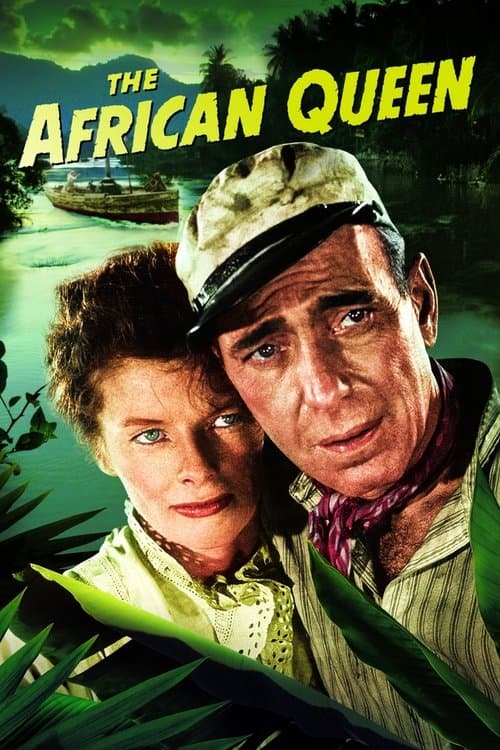
A prim Methodist missionary and a dissolute riverboat captain are thrown together in German East Africa at the outbreak of World War I, and their journey downriver toward the German gunboat Louisa tests whether their complete incompatibility might actually be a form of compatibility. Huston's film is a comedy about the improbability of love.
The African Queen
John Huston · 1951