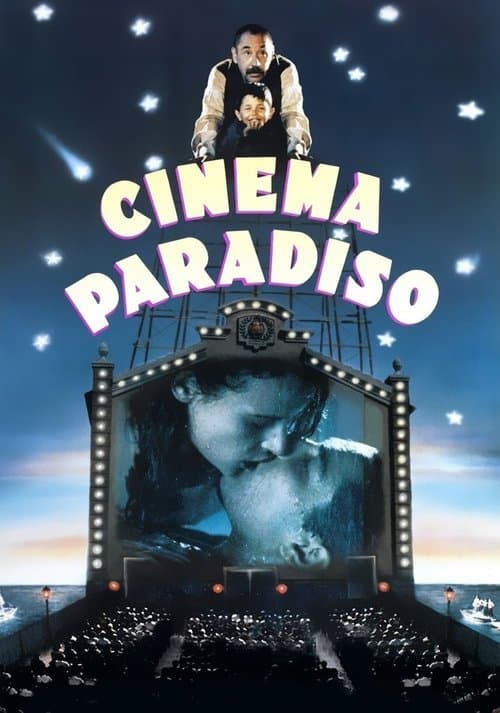
Cinema Paradiso
Giuseppe Tornatore · 1988
A famous film director returns to his Sicilian village after learning of the death of Alfredo, the projectionist who was his childhood mentor and surrogate father. A film about memory, cinema, and the losses that make us who we are.
Techniques Used
4 techniques identified in this film
Elderly Frame Narrative
NarrativeA structure in which an older protagonist looks back at formative experiences, with the gap between the aged narrator and the young subject providing the film's emotional and temporal depth.
How this film uses it
The adult Salvatore receives the news of Alfredo's death and the film dissolves into memory. The frame — a successful man at middle age — gives every childhood scene a poignant retrospective weight. We know before the flashbacks begin that this happiness ended, and that knowledge transforms how we watch it.
Musical Memory Trigger
SoundA recurring musical theme that becomes attached to specific memories, so that its return in the film triggers the same emotional response as the memory itself.
How this film uses it
Ennio Morricone's theme for Cinema Paradiso — simple, nostalgic, aching — is so thoroughly associated with the film's emotional register that its return at the end, during the reel of kissing scenes Alfredo assembled, makes the music itself feel like a recovered memory. The score is the film's most powerful narrative instrument.
Proleptic Opening
NarrativeBeginning a film at or near its conclusion — showing an end state before the story that led there — so that the narrative becomes a retrospective explanation of how things came to be as we first find them.
How this film uses it
The film opens with Salvatore as a successful adult director in Rome. Alfredo is already dead. The entire film is an answer to questions the opening poses: who was this man, what did he mean, and why does his death occasion such grief from someone who never came back?
Circular Structure
NarrativeA narrative that ends by returning to its beginning — closing the frame, repeating an image or gesture — so that the ending comments on the opening with the full weight of everything between them.
How this film uses it
The film ends in the same cinema where it began — but the building has been demolished and is being blown up. Salvatore watches from the same position, but everything has changed. The circular return to the cinema as a space makes the film's argument about loss and time in a single image.
You Might Also Like
Films that share at least one technique with Cinema Paradiso
Salvatore, a successful film director, returns to his Sicilian hometown after thirty years following the death of his mentor — the projectionist Alfredo — and remembers the love, loss, and cinema that shaped him. A film about cinema as a way of life, told by a man who chose cinema over life.
Cinema Paradiso
Giuseppe Tornatore · 1988

An elderly professor drives to receive an honorary degree and, on the journey, confronts the emotional failures of his life through dreams, memories, and encounters with strangers who mirror his younger self. Bergman's most accessible film, and his most direct statement about what constitutes a life well-lived.
Wild Strawberries
Ingmar Bergman · 1957
After a painful breakup, a man undergoes a procedure to erase his ex-girlfriend from his memory — but partway through, he changes his mind. A meditation on love, grief, and what makes experience worth having.
Eternal Sunshine of the Spotless Mind
Michel Gondry · 2004