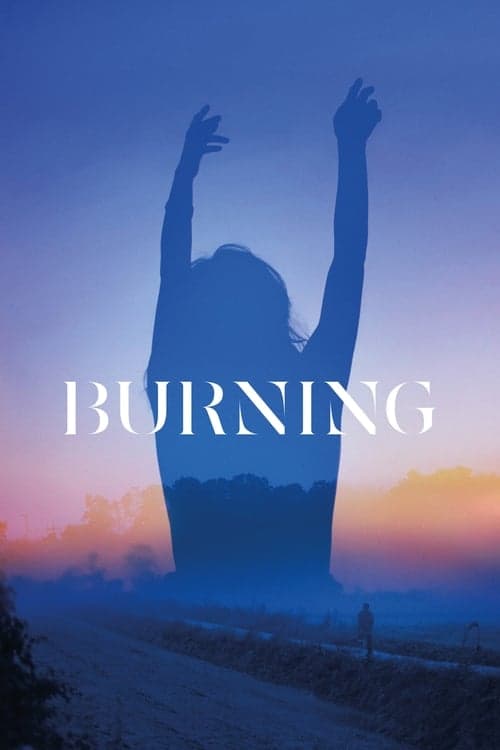
Burning
Lee Chang-dong · 2018
Jong-su, a struggling writer, reconnects with a childhood neighbor named Hae-mi who introduces him to Ben — a wealthy, mysterious man who confesses to a strange hobby. Lee Chang-dong's film uses the ambiguous genre of the literary thriller to ask whether rage without evidence is still rage, and whether justice requires proof.
Techniques Used
5 techniques identified in this film
Unreliable Reality
PsychologyMaintaining narrative ambiguity about whether events are literally occurring or are products of a character's psychological state — so that the film cannot be resolved into either a realistic or a fantastical account.
How this film uses it
Ben's claim to burn greenhouses may be real, metaphorical, or a lie. Hae-mi may have disappeared or simply left. Jong-su's jealousy may be accurate perception or paranoid projection. Lee Chang-dong refuses to adjudicate — the unreliable reality is the film's subject: what we cannot verify we must decide to believe or not.
Ambiguous Antagonist
NarrativeA figure who may or may not be villainous — whose guilt or innocence the film structurally refuses to confirm — making the audience's response to them the film's ethical test.
How this film uses it
Ben is the film's central ambiguity: wealthy, calm, possibly a serial killer, possibly just a rich man whom Jong-su has decided to hate because he cannot afford to be. The film provides sufficient evidence for both interpretations and compels the audience to make a choice the film itself will not make for them.
Slow Burn Horror Pacing
NarrativeBuilding tension through accumulation rather than action — extended sequences of dread and moral deterioration that make the climax's arrival feel both inevitable and devastating.
How this film uses it
Lee Chang-dong builds the film's dread through implication: a missing cat, an unexplained wristwatch, Hae-mi's absence. Nothing is confirmed; everything accumulates. The 148-minute runtime is the pacing's instrument — the slow burn requires time to become unbearable.
Symbolic Object
NarrativeAn object given such sustained narrative and visual attention that it accumulates meaning beyond its literal function — becoming a vessel for the film's thematic concerns.
How this film uses it
The greenhouse — Ben's claimed burning sites — is the film's central symbolic object: never shown, possibly nonexistent, standing in for all the things that disappear without trace in a world divided by wealth. Hae-mi's cat, her watch found at Ben's apartment, Jong-su's father's anger — the objects accumulate around an absence the film will not fill.
Epistemic Collapse
PsychologyA narrative event in which a character's entire framework for understanding events disintegrates — with no replacement available.
How this film uses it
Jong-su can never confirm whether Ben is a killer, whether Hae-mi is dead, whether his rage is justified. The film ends on an act of violence performed without certainty — the epistemic collapse producing not paralysis but action, which is perhaps the most disturbing resolution: Jong-su acts on what he cannot know.
You Might Also Like
Films that share at least one technique with Burning

A programmer is invited to his company's CEO's remote estate to administer a Turing test on an AI with a humanoid body — and finds that the real test may not be the one he was told about. A film about consciousness, manipulation, and the Turing test's most dangerous implication.
Ex Machina
Alex Garland · 2014

In postwar fascist Spain, a young girl named Ofelia retreats into an elaborate underground fantasy world while her cruel stepfather commands a military campaign against Republican insurgents. Del Toro's fairy tale is told with absolute moral seriousness — the fantasy is not escapism but the only form resistance can take.
Pan's Labyrinth
Guillermo del Toro · 2006

Pop idol Mima Kirigoe leaves her group to pursue an acting career, only to find her identity fracturing as a stalker, an internet impostor, and her own dissociated alter-ego begin to consume her sense of self. Satoshi Kon's debut feature is a visionary assault on celebrity, voyeurism, and the violence done to women by the male gaze.
Perfect Blue
Satoshi Kon · 1997