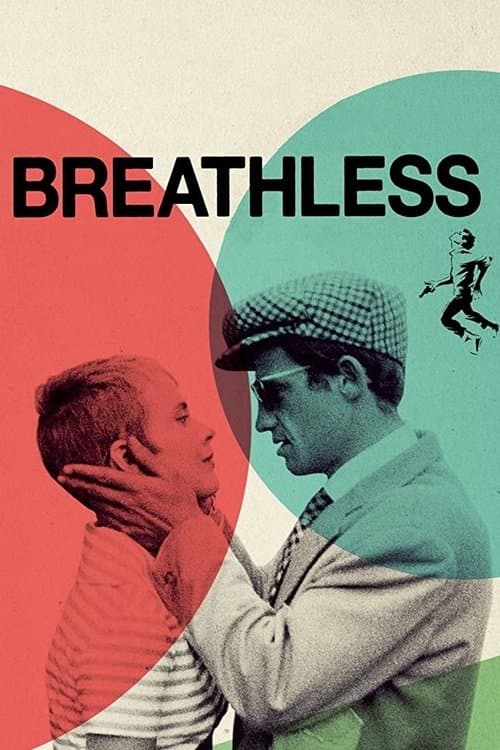
Breathless
Jean-Luc Godard · 1960
A small-time car thief kills a policeman and hides in Paris with an American student he wants to persuade to run to Italy with him. Godard's debut invented the French New Wave's formal vocabulary and remains the most influential film of the 1960s.
Techniques Used
4 techniques identified in this film
Jump Cut Propulsion
EditingDeliberately discontinuous cuts within a continuous scene — breaking the grammar of Hollywood continuity to create urgency, restlessness, or an explicit awareness of the film's constructed nature.
How this film uses it
Godard and editor Cécile Decugis invented the modern jump cut: cutting within scenes to remove dead time, creating a rhythm that feels like thought rather than observation. The cuts in the car and apartment scenes don't just pace the film — they argue that cinema doesn't need to pretend to be continuous. The jump cut announces the film's own artifice.
Direct Address
NarrativeA character speaking directly to the camera — acknowledging the audience — breaking the fictional frame to create a different kind of intimacy.
How this film uses it
Patricia glances at the camera — once, deliberately, and without explanation. The look breaks the film's fiction and implicates the audience in what they are watching: not the story of a man and a woman, but a film about watching a man and a woman. Godard's direct address is not comic; it is epistemological.
Genre Subversion
NarrativeA film that uses the conventions of an established genre to set expectations — then systematically refuses to fulfill them, the refusal being the film's argument.
How this film uses it
Breathless looks like an American gangster film — a criminal on the run, a femme fatale, a chase. Godard uses these conventions as scaffolding and then dismantles them from inside. Michel is not glamorous; he is petulant and small. Patricia's betrayal is not the femme fatale's treachery — it is a modern woman making a choice. The genre is the argument's starting point, not its destination.
Voiceover as Seduction
NarrativeA first-person narration so intimate and self-aware that the audience is drawn into the narrator's perspective regardless of the moral content of what they are narrating.
How this film uses it
Michel's internal monologue about Patricia — his calculations, his delusions, his self-mythologizing as a Bogart figure — is seductive precisely because it is honest about being self-mythologizing. Godard makes the audience like Michel while knowing they shouldn't, the narration performing the same work on the viewer that Michel performs on Patricia.
You Might Also Like
Films that share at least one technique with Breathless
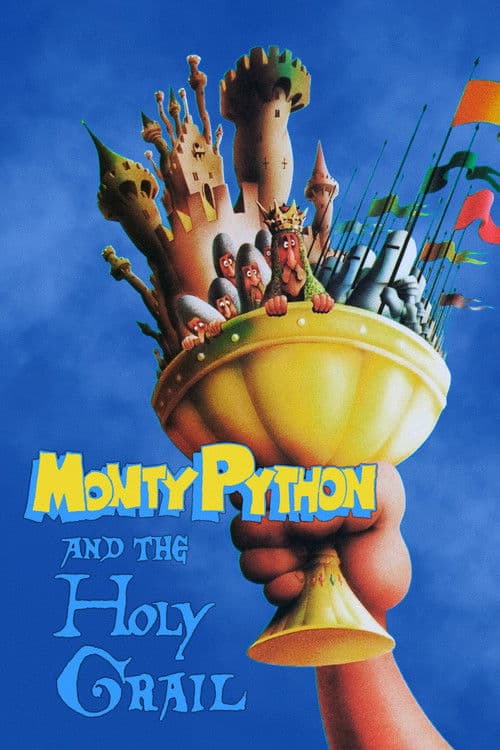
King Arthur and his Knights of the Round Table embark on a quest to find the Holy Grail, encountering a series of increasingly absurd obstacles, antagonists, and philosophical distractions. A film that destroys the chivalric epic by the most devastating possible method: taking it completely seriously.
Monty Python and the Holy Grail
Terry Gilliam, Terry Jones · 1975

Jordan Belfort rises from a Long Island stockbroker to the founder of a corrupt investment firm, spending a decade in a pharmaceutical and financial frenzy before his inevitable collapse. Scorsese's three-hour act of moral seduction deliberately makes the audience enjoy the excess it should condemn.
The Wolf of Wall Street
Martin Scorsese · 2013

A poverty-stricken family schemes their way into the lives of a wealthy household, until a shocking discovery upends everything. A darkly comic thriller that dissects class inequality through meticulous mise-en-scène.
Parasite
Bong Joon-ho · 2019