
Black Swan
Darren Aronofsky · 2010
A perfectionist ballerina wins the lead in Swan Lake but becomes consumed by paranoia and hallucination as opening night approaches. A psychosexual horror film about the violence of perfectionism and the dissolution of identity.
Techniques Used
4 techniques identified in this film
Psychological Doubling
PsychologyUsing a secondary character who mirrors, contrasts, or embodies the repressed aspects of the protagonist, functioning as an externalized projection of their inner conflict.
How this film uses it
Lily represents Nina's repressed sensuality and freedom — everything Nina cannot allow herself to be. As Nina's psychosis deepens, Lily becomes indistinguishable from her hallucinations.
Handheld Cinema Vérité
CinematographyUsing handheld camera movement to create intimacy, immediacy, and psychological proximity — placing the audience in direct, uncomfortable contact with a character's experience.
How this film uses it
Aronofsky's camera (shot by Matthew Libatique) stays inches behind Nina's neck and shoulders, creating claustrophobic proximity that traps the viewer inside her deteriorating perception.
Body Horror
PsychologyDepicting the human body in states of transformation, violation, or deterioration to externalize psychological distress as physical experience.
How this film uses it
Nina's hallucinations manifest as bodily: feathers under skin, snapping joints, transforming flesh — making her psychological dissolution viscerally physical and impossible to intellectualize.
Leitmotif
SoundA recurring musical phrase or theme associated with a specific character, idea, or transformation throughout a film.
How this film uses it
Clint Mansell's score repeatedly mutates Tchaikovsky's Swan Lake themes — presenting them pristinely for the White Swan and distorting them electronically for the Black Swan — sonically mapping Nina's fracture.
You Might Also Like
Films that share at least one technique with Black Swan
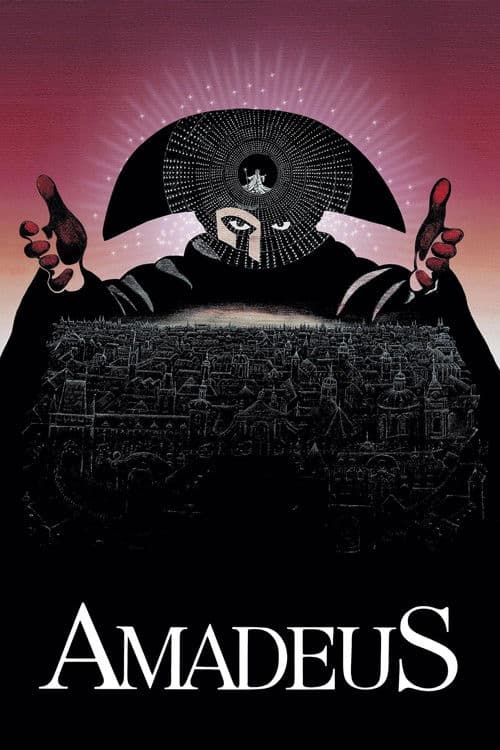
An aging Antonio Salieri confesses to a priest his belief that he murdered Wolfgang Amadeus Mozart — driven mad by the injustice of God giving divine genius to a vulgar, giggling man-child while leaving him only mediocrity. A film about talent, envy, and the cruelty of being almost gifted.
Amadeus
Miloš Forman · 1984

Pop idol Mima Kirigoe leaves her group to pursue an acting career, only to find her identity fracturing as a stalker, an internet impostor, and her own dissociated alter-ego begin to consume her sense of self. Satoshi Kon's debut feature is a visionary assault on celebrity, voyeurism, and the violence done to women by the male gaze.
Perfect Blue
Satoshi Kon · 1997

A Black man visiting his white girlfriend's family for the weekend uncovers a disturbing secret beneath their liberal veneer. A precision-engineered social horror film that uses genre mechanics to externalize systemic racism.
Get Out
Jordan Peele · 2017