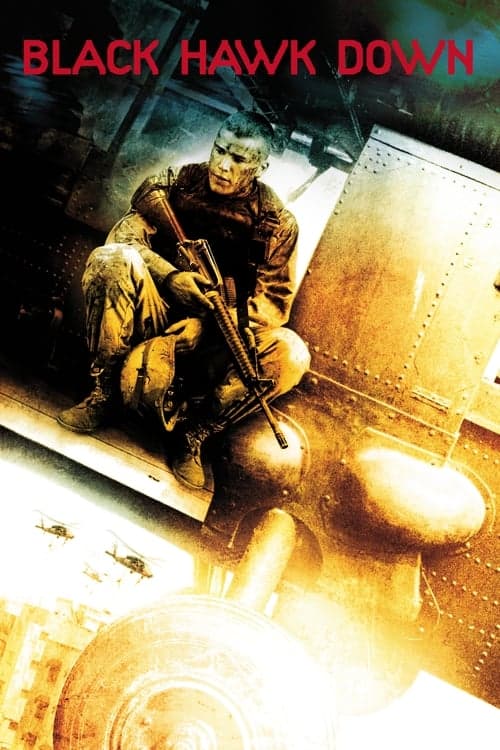
Black Hawk Down
Ridley Scott · 2001
In 1993 Mogadishu, a U.S. Army Ranger and Delta Force mission to capture lieutenants of a Somali warlord descends into a catastrophic eighteen-hour battle after two Black Hawk helicopters are shot down. Ridley Scott's film is the definitive modern warfare film — a technical document of what combat actually does to the human body and mind.
Techniques Used
4 techniques identified in this film
Ensemble Characterization Without Backstory
NarrativeA character-building approach that reveals who people are through present behavior and decision rather than biographical exposition.
How this film uses it
Scott introduces dozens of soldiers in the opening sequences without backstory — each man defined entirely by how he behaves under fire, the film trusting combat behavior to constitute character in ways that civilian biography cannot.
Immersive Combat Sound Design
SoundA sound design approach that places the audience physically inside an environment of chaos through precise, enveloping audio.
How this film uses it
Percy and Karen Bosher's sound design makes the Mogadishu battle a physical experience — the RPG impacts, the helicopter blades, the rifle fire, the radio traffic — engineering the audio environment to replicate the sensory overload of sustained urban combat.
Shutter Angle Manipulation
CinematographyThe adjustment of a camera's shutter speed to alter the visual quality of motion, creating either the strobing, staccato effect of high-speed action or the blurred flow of slow moments.
How this film uses it
Slawomir Idziak shoots the battle sequences with a high shutter angle that gives the violence a staccato, strobing quality — the motion slightly wrong, the image skipping frames — encoding the experience of combat as a perceptual distortion rather than clear observation.
Handheld Kinetic Cinematography
CinematographyA restless, fast-moving handheld style that generates physical energy and immersion, particularly in chase or action sequences.
How this film uses it
Idziak's handheld camera runs with the soldiers through the Mogadishu streets — unable to maintain a stable frame, constantly losing and recovering the action — making the audience share the disorientation of men fighting in an environment they cannot map.
You Might Also Like
Films that share at least one technique with Black Hawk Down
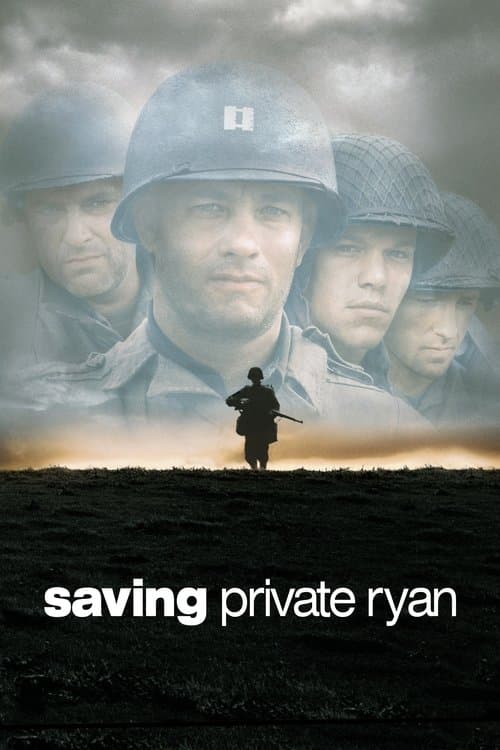
A squad of soldiers is sent behind enemy lines after D-Day to retrieve the last surviving son of a family that has lost four boys in the war. The film's opening twenty-four minutes are the most viscerally honest depiction of combat ever committed to film.
Saving Private Ryan
Steven Spielberg · 1998
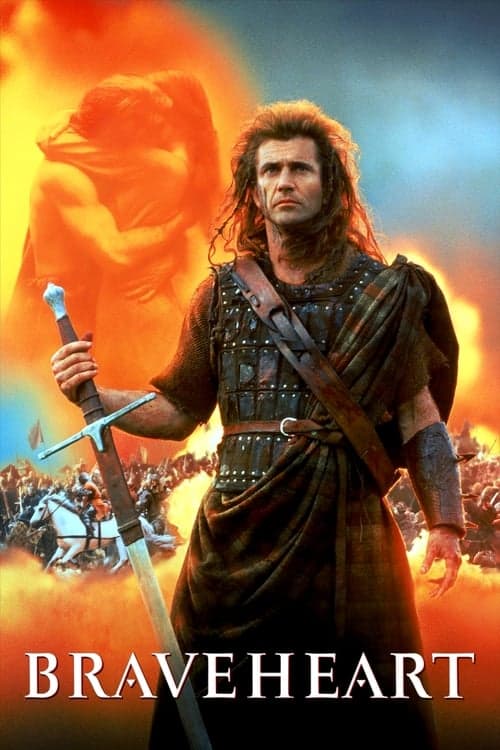
William Wallace leads a Scottish rebellion against English rule in the 13th century, transforming from farmer to warrior to martyr. A populist epic that made the battles of medieval Scotland feel viscerally, physically immediate.
Braveheart
Mel Gibson · 1995
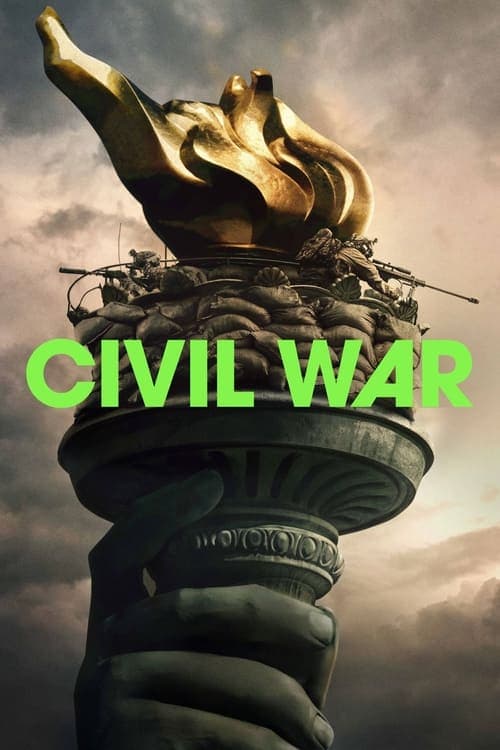
A team of war journalists drives from New York to Washington D.C. to photograph the President before Western Forces soldiers reach the White House, passing through a fractured America where the rules of the old civilization no longer apply. Alex Garland's film asks what it costs to turn catastrophe into images.
Civil War
Alex Garland · 2024