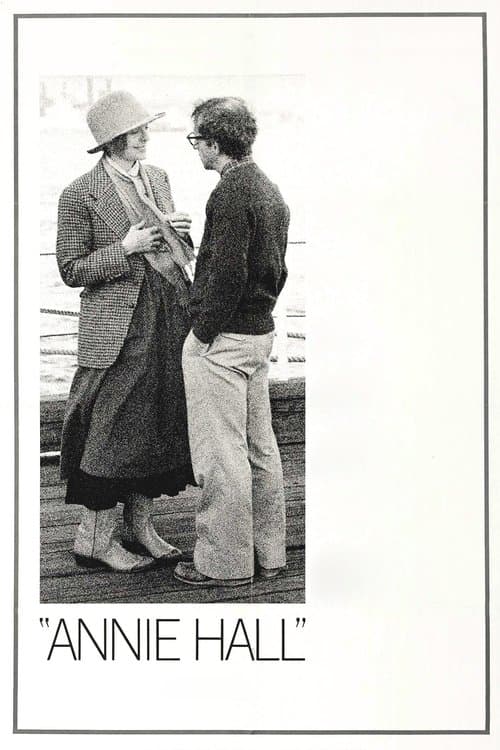
Annie Hall
Woody Allen · 1977
A neurotic New York comedian attempts to understand why his relationship with Annie Hall ended by examining the relationship itself — talking directly to the audience, disrupting time, and refusing the conventions of romantic comedy. The film that made the breakup movie serious.
Techniques Used
4 techniques identified in this film
Direct Address
NarrativeA character speaking directly to the camera — acknowledging the audience — breaking the fictional frame to create a different kind of intimacy with the viewer.
How this film uses it
Alvy Singer addresses the camera constantly — from the opening joke about not wanting to belong to any club, through the film's corrections and asides, to the final summary of the relationship. The direct address makes the audience his analyst, therapist, and jury simultaneously. The film is structured as a monologue delivered to us.
Non-Linear Narrative
NarrativeA story structure that disrupts chronological order — moving between time periods, revisiting scenes from different perspectives — making the arrangement of events itself carry meaning.
How this film uses it
Allen moves freely through Alvy's past and present, revisiting scenes, interrupting them, and occasionally inserting adult Alvy into childhood memories. The structure enacts the film's argument: we do not experience relationships chronologically; we experience them as simultaneous memory, present feeling, and retrospective analysis.
Deadpan Absurdism
NarrativeA tonal register in which bizarre or impossible events are presented with complete seriousness, the comedy arising from the gap between content and delivery.
How this film uses it
Subtitles translate what characters are 'really' saying during a conversation. Marshall McLuhan appears to settle an argument about his own work. Split screen shows two families simultaneously. Allen deploys these devices with no tonal shift — absurdity treated as ordinary, making the film's emotional honesty feel all the more surprising when it arrives.
Circular Structure
NarrativeA narrative that ends by returning to its beginning — a repeated image, gesture, or line — so that the ending comments on the opening with the full weight of everything between them.
How this film uses it
The film ends with the joke Alvy told at the beginning — about needing the eggs. The circular return does not mean things have not changed; it means that what he concluded at the start has now been earned through the entire film. The circle is not repetition but confirmation: he returns to the same insight from experience rather than theory.
You Might Also Like
Films that share at least one technique with Annie Hall
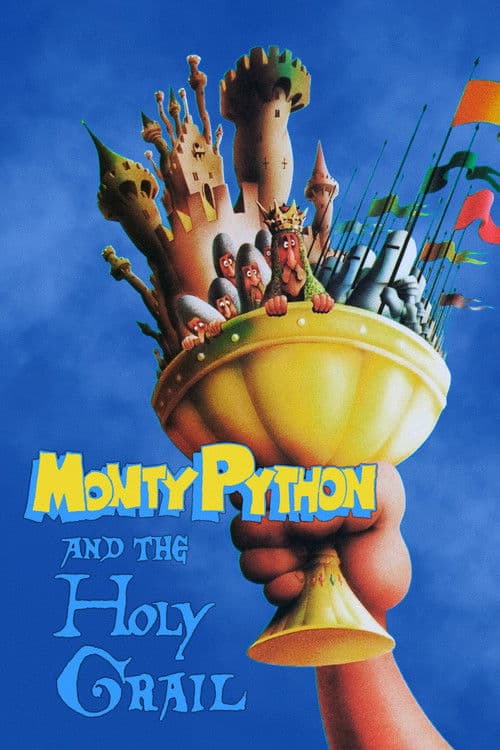
King Arthur and his Knights of the Round Table embark on a quest to find the Holy Grail, encountering a series of increasingly absurd obstacles, antagonists, and philosophical distractions. A film that destroys the chivalric epic by the most devastating possible method: taking it completely seriously.
Monty Python and the Holy Grail
Terry Gilliam, Terry Jones · 1975

A skilled thief who enters people's dreams is offered a chance to have his criminal record erased if he can implant an idea into a CEO's mind. A labyrinthine heist film about grief, reality, and the architecture of the unconscious.
Inception
Christopher Nolan · 2010

After a painful breakup, a man undergoes a procedure to erase his ex-girlfriend from his memory — but partway through, he changes his mind. A meditation on love, grief, and what makes experience worth having.
Eternal Sunshine of the Spotless Mind
Michel Gondry · 2004