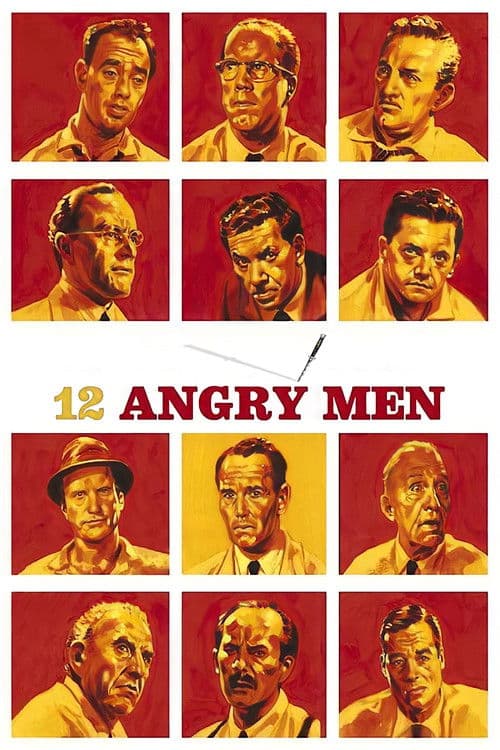
12 Angry Men
Sidney Lumet · 1957
Twelve jurors deliberate the fate of a teenager accused of murder, and one holdout methodically dismantles the case through logic and moral persistence. A real-time chamber film about prejudice, groupthink, and the fragility of reasonable doubt.
Techniques Used
5 techniques identified in this film
Single-Room Unity
NarrativeRestricting the action of an entire film to a single location, using spatial confinement to generate tension and force the drama to emerge entirely from character rather than environment.
How this film uses it
The film takes place almost entirely in one sweltering jury room. Lumet uses the room's physical constraints — the table, the walls, the single window — to externalize the psychological pressure on each juror as the vote shifts.
Progressive Lens Compression
CinematographyDeliberately changing the focal length of the lens over the course of a film — shifting from wide angle to telephoto — to create increasing claustrophobia and psychological pressure as the story intensifies.
How this film uses it
Lumet and cinematographer Boris Kaufman began with wide-angle lenses that gave the room a spacious, objective feel, then progressively moved to longer lenses that compress space and isolate faces. By the climax, the room feels physically smaller than it was at the start.
Socratic Dialogue Structure
NarrativeUsing a question-and-answer argumentative structure — in which one interlocutor systematically tests and dismantles the other's positions — as the primary engine of dramatic action.
How this film uses it
Juror Eight (Fonda) never claims to know what happened. Instead, he asks questions — about the knife, the witness's testimony, the timeline — and lets the answers expose the case's fragility. The drama is entirely propositional: the audience watches an argument become a moral awakening.
Heat as Psychological Pressure
CinematographyUsing environmental conditions — temperature, humidity, physical discomfort — rendered through lighting, costume, and performance to externalize the psychological state of characters.
How this film uses it
The film takes place on the hottest day of the year. Lumet and Kaufman light the room to feel genuinely oppressive — sweat visible on faces, fans moving sluggishly, jackets shed. The physical discomfort maps onto the jurors' unwillingness to stay in the room and think carefully.
Ensemble Characterization Without Backstory
NarrativeEstablishing distinct, memorable characters entirely through behavior and argument within the film's present tense, without recourse to flashback, exposition, or named history.
How this film uses it
We never learn most jurors' names. Their identities — the architect, the bigot, the advertising man, the old watchmaker — emerge entirely from how they argue, what they fear, and what they're willing to do. Character is revealed as position rather than history.
You Might Also Like
Films that share at least one technique with 12 Angry Men

A German U-boat crew patrols the North Atlantic during World War II, enduring mechanical failure, allied depth charges, and the slow psychological erosion of men trapped in a steel tube under the sea. The definitive submarine film and one of cinema's most sustained exercises in claustrophobic dread.
Das Boot
Wolfgang Petersen · 1981
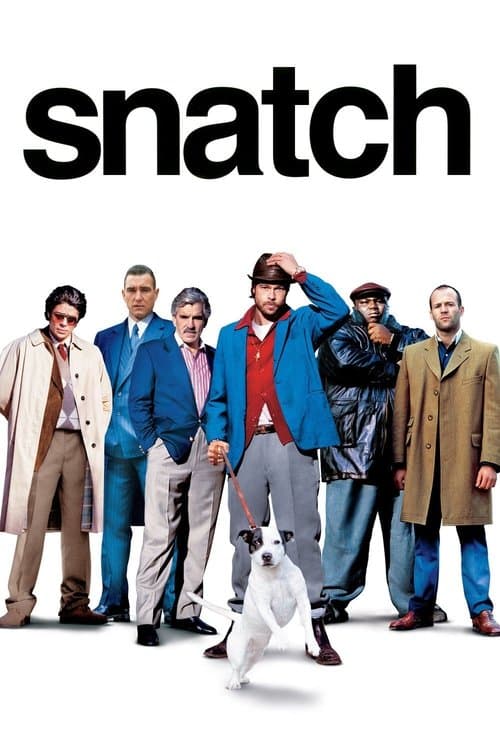
A stolen diamond, a bare-knuckle boxing match, and a series of spectacularly unlucky criminals converge in a chaos of escalating misfortune across London's criminal underworld. Guy Ritchie's second feature is a machine for controlled disorder — every complication is the setup for a worse complication.
Snatch
Guy Ritchie · 2000
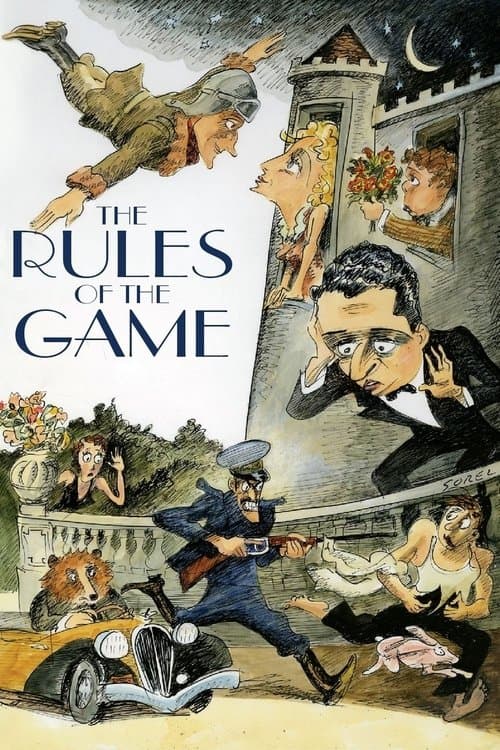
A weekend house party at a French château brings together aristocrats and their servants in a web of romantic entanglements, each participant playing by rules they barely understand. Jean Renoir's masterpiece is a savagely funny and melancholy autopsy of a class about to be destroyed by history.
The Rules of the Game
Jean Renoir · 1939